A bluetooth amplifier can be the simplest way to bring streaming audio into a pair of passive speakers. It combines a wireless receiver with a power amplifier, so your phone, tablet, or computer sends music directly to the box while the amplifier drives the speakers. That sounds straightforward, but the market includes genuinely useful products, underpowered mini units, and plenty of inflated claims.
After 12 years working on recording mixes in Nashville, I judge an amplifier by the things that affect music: output power, distortion, noise, connection stability, and sensible controls. A bluetooth amplifier does not need a $500 cable or exotic internal parts to sound good. It needs enough clean power for your speakers and a signal path that does not introduce obvious problems.
What a bluetooth amplifier actually does
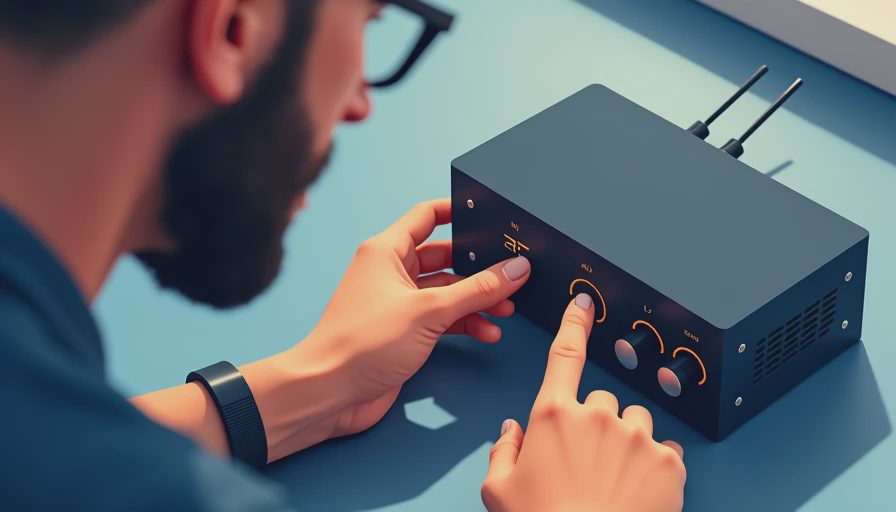
A traditional stereo system separates the source, preamplifier, power amplifier, and sometimes a digital-to-analog converter. A bluetooth amplifier folds several of those jobs into one compact chassis. The wireless receiver accepts a Bluetooth signal, converts it into an analog audio signal, and sends that signal to the amplifier section. The output stage then drives passive speakers through the speaker terminals.
Most current models use Bluetooth 5.0 or newer, but the version number is not a guarantee of sound quality. Codec support matters more. SBC is common and perfectly listenable for casual streaming, while AAC can be useful with Apple devices. aptX, aptX HD, and LDAC can offer higher data rates with compatible phones and receivers. The complete connection still depends on both devices, so buying an amplifier with LDAC does not magically upgrade an iPhone that does not transmit it.
Power ratings require similar skepticism. A unit advertised at 100 watts per channel might reach that number briefly, at a high distortion level, or into a speaker load you do not own. Look for continuous power into 8 ohms, ideally with both channels operating. For a small office or bedroom, 15 to 30 clean watts per channel can be plenty. For larger rooms or inefficient speakers, 50 to 100 watts provides more useful headroom.

Features worth paying for
The best bluetooth amplifier for a straightforward living-room system usually has more than wireless input. Look for an optical input if you plan to connect a television, because optical avoids the electrical noise that can appear through some computer or TV headphone outputs. A subwoofer output is valuable if you want deeper bass later without replacing the amplifier. A remote control, tone controls, and a physical volume knob also improve daily use more than a decorative display does.
Speaker compatibility is the practical checkpoint. Confirm that the amplifier supports your speakers' impedance, commonly 4 or 8 ohms. A compact unit that is comfortable with 8-ohm bookshelf speakers may run hot or shut down with demanding 4-ohm floorstanders. Check the manual rather than trusting a marketplace headline.
Pay attention to idle noise. With the volume turned up and no music playing, place your ear near the tweeter. A faint hiss at a few inches is not unusual; a loud hum from the listening position is a design or grounding problem. In my garage listening room, this test eliminates more budget products than dramatic claims about “audiophile-grade” components.
Good options at different budgets
Around $70 to $120, products such as the Fosi Audio BT20A Pro and similar compact Class D units can make excellent starter systems. They typically offer simple Bluetooth connectivity, speaker terminals, and enough power for efficient bookshelf speakers. Their limitations are usually basic inputs, modest power supplies, and less protection than a full-size receiver. They are a strong fit for a desk, apartment, or second room.
The $150 to $300 range brings more flexibility. A model such as the WiiM Amp adds network streaming and room-friendly features beyond basic Bluetooth, while products from Arylic and SMSL often focus on compact connectivity and digital inputs. The right choice depends on whether you want a small wireless power amp or an all-in-one streaming hub. Do not pay extra for a feature you will never use.
At higher prices, brands such as NAD, Cambridge Audio, and Marantz offer more robust construction, better input selection, and stronger service support. That can matter with difficult speakers or a system you expect to keep for a decade. It does not mean a $700 unit automatically sounds three times better than a $150 one. Once distortion is low and power is adequate, speaker placement and room acoustics usually produce the bigger improvement.
Bluetooth versus Wi-Fi streaming
Bluetooth is convenient because nearly every phone supports it and setup takes less than a minute. Its range is usually sufficient for a normal room, and you can hand control to guests without giving them access to your home network. The tradeoff is that Bluetooth depends on the phone for playback and can compress the signal.
Wi-Fi streaming supports services and protocols such as Spotify Connect, AirPlay 2, and Chromecast on compatible equipment. It can offer better range, higher-resolution playback, and continued control when your phone leaves the room. It also adds network setup and occasional software frustration. For a kitchen system or casual listening, a bluetooth amplifier is often the more dependable answer. For a serious primary system, compare both connection methods.
How to set one up correctly
Start with speaker placement. Put bookshelf speakers on stands or a solid shelf, with tweeters roughly at ear height. Keep them several inches from the wall unless the manufacturer recommends otherwise, and form a loose triangle between the speakers and your chair. Use ordinary 14- or 16-gauge speaker wire for normal room lengths; expensive cable will not repair poor placement.
Connect the left and right speakers with matching polarity. The red terminal on the amplifier should connect to the red terminal on each speaker. Then select the correct input, pair your phone, and begin with the phone and amplifier volume near the middle of their ranges. If the sound is harsh, thin, or compressed, reduce the volume before assuming the amplifier is defective. Clipping from excessive level is far more damaging than a lack of exotic components.
Give the system a short practical test with familiar recordings. Use a quiet vocal track to hear hiss, a bass-heavy recording to test control, and a dense rock or orchestral mix to check whether the sound becomes strained. You are listening for clean transients, stable vocals, and bass that remains tight when the volume rises.
Common mistakes to avoid
The first mistake is buying by wattage alone. A well-designed 30-watt amplifier can outperform a poorly specified “300-watt” unit. The second is ignoring speaker sensitivity. Efficient speakers need less power, while insensitive models can expose the limits of a tiny amplifier quickly.
Another mistake is assuming every Bluetooth connection sounds identical. Codec support, antenna design, interference, and the phone itself all matter. Keep the source within a reasonable range and avoid placing the amplifier behind a metal cabinet or beside a Wi-Fi router crowded with other electronics.
Finally, do not chase audible miracles from cables, burn-in claims, or glowing product language. Measurements will not tell you everything, but frequency response, output power, and distortion reveal whether a product is fundamentally competent. Trust your ears. But measure first.
My practical buying recommendation
For a first system, I would pair a bluetooth amplifier costing roughly $100 to $200 with speakers you already know you enjoy. Spend the remaining budget on stands, placement, or a small subwoofer rather than premium wire. Choose optical input if a TV is involved, a subwoofer output if you want an upgrade path, and enough continuous power to avoid clipping at your normal listening level.
A bluetooth amplifier is not automatically a compromise. The right one can deliver clean, engaging sound in a package smaller than a hardback book. Just match its power and inputs to your speakers, test the connection in your room, and ignore specifications that are impossible to verify.
This article contains affiliate links, which can earn me a commission if you buy through them at no additional cost. I only recommend products I would consider for a real listening system, whether the sample came from a manufacturer or was purchased for review.

No notes yet — write the first one.