Bookshelf speakers are one of the smartest ways to improve a modest stereo system without turning your living room into a recording studio. I have spent 12 years listening critically from the other side of a mixing console, and the basic lesson still holds: a well-designed speaker, placed properly, beats an expensive speaker shoved into a corner. You do not need golden ears, a $5,000 cable, or a rack of mysterious black boxes. You need sensible engineering and a realistic plan for your room.
What makes a good compact speaker?
A bookshelf speaker is usually a small, two-way speaker with a woofer for bass and midrange plus a tweeter for higher frequencies. Most use a passive design and require an amplifier, although powered models include amplification inside the cabinet. Size matters, but it does not tell you everything. A compact cabinet can produce clean, balanced sound, while a larger model can sound boomy if its port and woofer are poorly controlled.
The measurements I care about first are frequency response, distortion, sensitivity, and impedance. Frequency response shows whether the speaker is broadly balanced or heavily colored. A bump in the upper treble can make a speaker sound “detailed” for ten minutes before cymbals become exhausting. Excessive bass around 100 hertz creates warmth, but it can also make kick drums and male vocals muddy. Distortion tells us what happens when the speaker works harder, while sensitivity helps predict how much amplifier power it needs.
There is no single perfect curve for every listener. A slight treble lift can suit a heavily carpeted room, while a warmer balance often works better with reflective floors and bare walls. The important point is knowing what you are hearing rather than accepting vague claims about musicality.
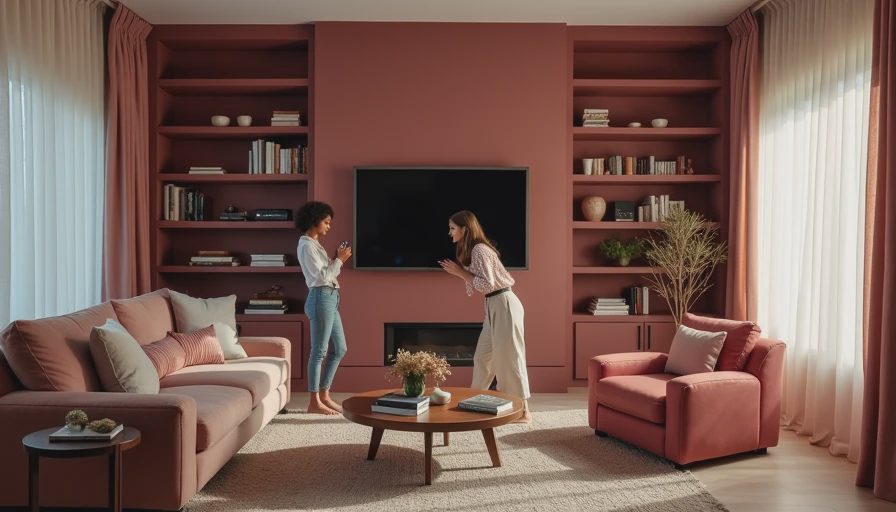
Choosing bookshelf speakers for your room and budget
For a desk, bedroom, or small apartment, the $150 to $400 range includes genuinely capable options. The ELAC Debut 2.0 B6.2 offers a full, forgiving presentation and works well for rock, podcasts, and streaming. The Q Acoustics 3030i has an easygoing balance and useful bass for its size. If you prefer a more forward, studio-like sound, the JBL 530 can be a strong sale-priced choice, though its cabinet is larger than the name suggests.
Near $400 to $800, the KEF Q350 and ELAC Uni-Fi models bring better imaging and improved driver integration. Imaging means the apparent placement of instruments across the stereo field. When it works, a singer sits in the center and guitars occupy believable positions instead of forming two disconnected blobs. The KEF concentric driver design can make that center image especially stable for listeners who sit off-axis.
Do not confuse price with output. If you listen loudly in a large open-plan room, a small speaker may run out of clean volume even if it sounds beautiful at moderate levels. For a desk or 12-by-15-foot room, that limitation is less concerning. For a party space, consider a larger woofer, higher sensitivity, or a subwoofer rather than demanding stadium bass from a five-inch driver.
Passive, powered, or wireless?
Passive bookshelf speakers give you the most flexibility. You can start with a basic integrated amplifier, then add a better DAC, turntable, or subwoofer later. Models from Yamaha, Sony, and Onkyo are commonly available around $200 to $500, and a used integrated amplifier from Marantz or Pioneer can be an excellent value if it is in good working condition.
Powered speakers simplify the system. The Audioengine A5+, Kanto YU6, and KEF LSX II LT each combine amplification with multiple inputs, although they serve different budgets and priorities. Powered models are attractive for a desk because they eliminate speaker wire between an amplifier and the cabinets. They can also include Bluetooth, USB, optical, or network streaming.
Wireless convenience is not automatically better sound. Bluetooth codecs, internal digital processing, and input quality vary by model. Look at the actual connections you need before buying. A turntable with a moving-magnet cartridge needs a phono preamp, either built into the turntable, amplifier, or powered speaker. It cannot simply plug into a standard line input and be expected to work correctly.
Placement matters more than another upgrade
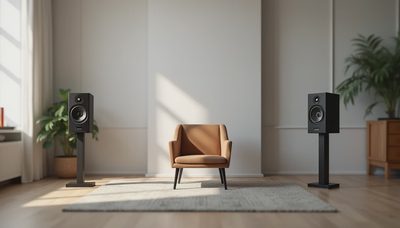
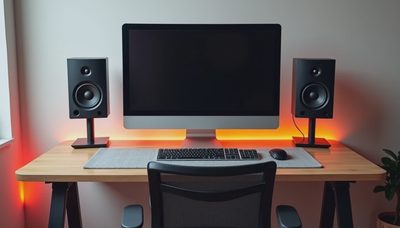
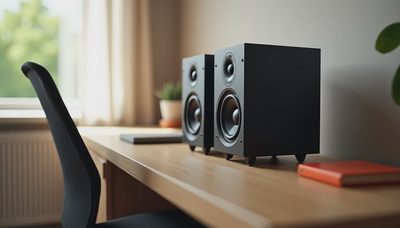
Even excellent bookshelf speakers can disappoint when placed directly on a shelf. Put them on stands when possible, with the tweeters close to ear height while seated. Keep the front edges roughly even, aim both speakers toward your listening position, and form an approximate equilateral triangle. A six-foot spacing with a six-foot listening distance is a useful starting point, not a sacred measurement.
Leave at least six to twelve inches behind rear-ported designs if you want controlled bass. If the sound is thick, pull them farther from the wall or reduce the amplifier’s bass setting. If the center image feels weak, check that the left and right channels are wired with the same polarity. A reversed speaker connection can make bass seem hollow and vocals strangely diffuse.
Stands should be heavy enough not to wobble. Blu Tack or similar removable mounting material can keep cabinets stable, but do not use it as an excuse to place speakers inside a crowded bookcase. Furniture reflections alter the midrange, which is where voices, guitars, piano, and much of the emotional information in a mix live.
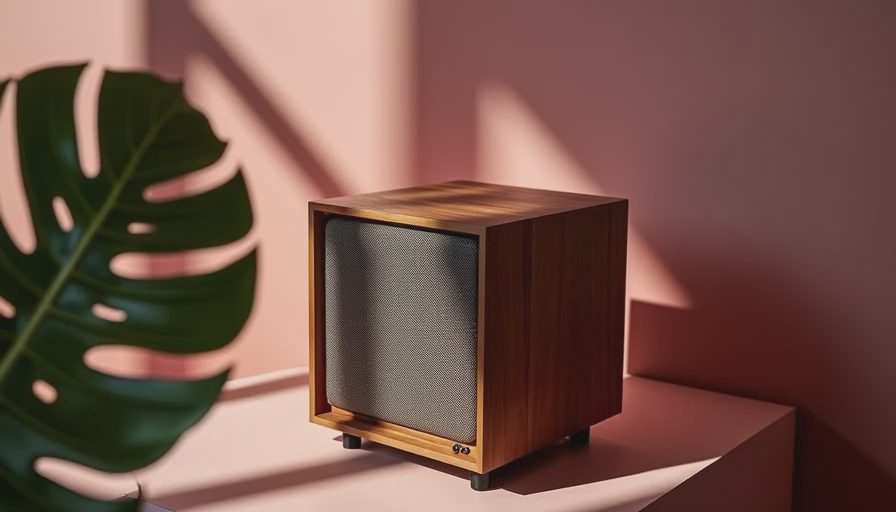
The bookshelf speakers I would shortlist
For a first serious system, I would start with the ELAC Debut 2.0 B6.2, Q Acoustics 3030i, Polk Audio Reserve R200, and KEF Q350. These are not interchangeable recommendations. The ELAC is friendly and substantial, the Q Acoustics is relaxed, the Polk has strong detail and scale, and the KEF provides a focused stereo image. Listen for the model that keeps vocals natural at the volume you actually use.
On a tighter budget, the Micca RB42 and Dayton Audio MK402X are worth investigating, especially for desktop listening. They will not deliver the effortless bass or refinement of a larger $500 pair, but they can outperform cheap all-in-one systems when positioned carefully. Spending $40 on basic stands or isolation pads may improve the result more than spending another $100 on a cable.
For powered bookshelf speakers, I would compare the Kanto YU4, Audioengine A5+, and Vanatoo Transparent Zero based on inputs and listening distance. The Vanatoo is particularly practical for a desk, while the Audioengine emphasizes a more traditional room-filling presentation. Prices and revisions change, so compare current measurements and return policies before clicking buy.
A practical buying checklist
Start by measuring the room and deciding whether you need passive or powered equipment. Then list every source: phone, television, turntable, computer, CD player, or network streamer. Check amplifier impedance guidance, available wattage, and whether the speaker’s sensitivity fits your listening habits. Do not obsess over a large wattage number; clean power and sensible volume are more useful than a badge on the front panel.
Next, audition familiar recordings. Use a vocal track to judge midrange balance, an acoustic recording to hear transient clarity, and a bass-heavy track to test control. Listen for fatigue after 20 minutes, not just excitement during the first song. A speaker with exaggerated treble often wins a quick comparison and loses a long evening.
Finally, buy from a retailer with a clear return policy and avoid upgrading before placement is sorted. Move the speakers a few inches at a time, adjust toe-in, and give your ears a day to adapt. Trust your ears. But measure first. That approach has served me in professional control rooms, and it works just as well in a living room.
This post may contain affiliate links. If you purchase through one, I may earn a commission at no additional cost to you. Review units and sponsored products are identified when applicable, and they do not buy a favorable conclusion.
No notes yet — write the first one.