Active speakers put the amplifier inside the cabinet, so you can build a serious music system without stacking a receiver, separate power amp, and several mystery boxes. For many listeners, active speakers are the cleanest route from a streaming app or turntable to useful, satisfying sound. The important question is not whether they are fashionable. It is whether the design, measurements, inputs, and room placement fit how you actually listen.
I spent 12 years mixing records in Nashville, where every change in a monitor had to survive long sessions and honest comparison. That experience makes me suspicious of poetic product descriptions. A speaker that sounds "fast" usually has a frequency-response or bass-control story behind it. A "warm" speaker generally has less upper-midrange or treble energy. Trust your ears. But measure first.
What active speakers actually do
A truly active speaker uses one or more built-in amplifiers and an electronic crossover. The signal is divided before amplification, allowing separate amp channels to drive the woofer and tweeter. That can improve efficiency and control, though the result still depends on competent engineering. Active speakers are not automatically neutral, powerful, or well designed.
The term powered speaker is often used for the same products, even though it can describe a simpler arrangement. In some powered models, one amplifier drives a passive crossover that feeds both drivers. The distinction matters to engineers, but a buyer should focus on performance, controls, and reliability rather than winning a terminology argument.
The practical benefit is fewer boxes and fewer cables. A pair such as the KEF LSX II LT can accept network audio and digital sources, while an Audioengine A5+ Wireless keeps operation simple for a desk or small living room. You still need speaker cable between some left and right pairs, plus power at the main cabinet, but setup is considerably less intimidating than assembling a traditional hi-fi stack.

Why active speakers can beat a cheap amplifier system
The amplifier and driver are designed as a package. That gives the manufacturer a chance to set gain, limit dangerous signals, and tune the crossover for the exact woofer and tweeter. A good package can produce cleaner results than pairing a $150 amplifier with random passive speakers simply because the box says 100 watts.
That wattage number also needs context. Continuous power, sensitivity, distortion, and cabinet size tell you more than a large peak figure on a retail page. A small pair will not create deep cinema bass at party volume, regardless of its advertised power. In a nearfield setup, however, 30 to 75 watts per channel can be entirely sufficient. At a normal listening distance, clean output and sensible bass protection matter more than headline numbers.
Active speakers also reduce upgrade anxiety. Instead of wondering whether an amplifier has the right impedance or enough current, you get a matched system. The tradeoff is that a failed internal amplifier can make repair more complicated, and you cannot casually swap amplification later. That is a real consideration for someone who enjoys restoring old Marantz or Pioneer gear.
Choosing active speakers for your room
Start with listening distance. On a desk, compact models such as the Kanto YU6 or Audioengine A5+ can work well, but their rear ports need breathing room from the wall. For a small living room, the Q Acoustics M20 HD offers more cabinet volume and useful digital connectivity. Studio-oriented options such as the JBL 305P MkII can deliver strong value, but they usually expect balanced connections and a little patience with gain controls.
Room size does not automatically require the biggest cabinet. A large speaker pushed into a corner can produce bloated bass, while a smaller speaker placed 12 to 24 inches from the wall may sound tighter and clearer. If the system has an adjustable high-pass filter, use it when adding a subwoofer. If it has bass and treble trim, make small changes of one or two decibels instead of turning knobs until the tonal balance becomes obviously wrong.
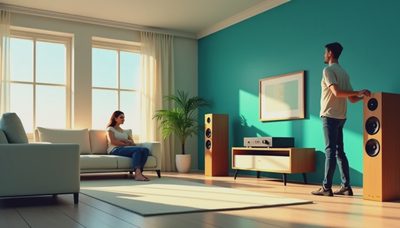
For a desk, aim the tweeters toward your ears and form a roughly equal triangle between your head and the two speakers. For a couch, raise the speakers so the tweeters are near seated ear level. Toe-in, meaning angling the speakers toward the listener, can sharpen center vocals and reduce reflections from nearby walls.
Inputs matter more than exotic cables
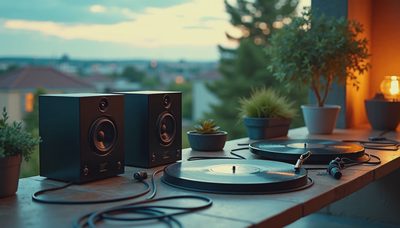
Before buying active speakers, list every source you plan to use. A television may need optical input or HDMI ARC. A turntable with a moving-magnet cartridge needs a phono preamp, either built into the turntable or included in the speakers. A phone can use Bluetooth, while a computer may sound cleaner through USB or optical output.
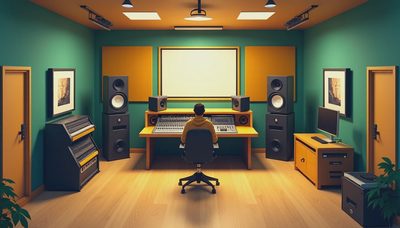
Bluetooth is convenient, but codecs and implementation vary. For critical listening, a wired digital connection is usually the simpler baseline. Balanced XLR or TRS inputs are useful in a studio environment because they reject interference over long cable runs. They are not automatically better for a three-foot connection between a desktop interface and speakers.
This is where active speakers can save money without looking cheap. You might spend $300 to $600 on a capable pair, then add a $30 optical cable and a modest streaming source. Spending $200 on a boutique interconnect will not repair a poor room layout, a clipped recording, or an overdriven small woofer.

Realistic picks by listening style
For a desktop, prioritize low hiss, front-panel volume control, and a compact footprint. The Audioengine A5+ Wireless is easy to live with, while studio monitors can offer more revealing performance if you do not mind separate volume control. I would audition the system at low volume first; hiss that is obvious during quiet passages will become annoying over time.
For a television or living room, HDMI ARC, a remote, and dependable standby behavior can matter more than the last trace of treble detail. KEF and Q Acoustics offer consumer-friendly designs with broader connectivity, while JBL studio monitors favor directness over lounge-room convenience. For vinyl, confirm the phono-stage requirement before ordering. A speaker with no analog input will not accept a bare turntable cartridge by itself.
Subwoofer integration is another dividing line. Look for a dedicated sub output, high-pass filtering, or a documented bass-management system. Without high-pass filtering, the main speakers continue reproducing deep bass, and the sub simply adds more energy. That can sound louder but not cleaner.
How I would test a pair at home
Use familiar recordings that expose different problems: a voice-heavy acoustic track for midrange balance, a bass line with sustained notes for boom, and a dense rock mix for congestion. Compare at matched volume; the louder speaker almost always seems more exciting. Listen for sibilance on S sounds, bass notes that swell after the beat, and vocals that move backward when the arrangement gets busy.
Then change placement before judging the speaker. Move each cabinet a few inches, adjust toe-in, and listen again. If a $400 pair improves dramatically after basic positioning, that is more useful information than a reviewer calling it "musical." Measurements from reputable sources can reveal whether treble is elevated or bass rolls off early, but they do not replace hearing how your room interacts with the speaker.
For most buyers, active speakers make sense when simplicity, compact systems, and matched amplification matter. Choose traditional passive speakers if you want to restore vintage amplifiers, upgrade components one at a time, or keep using a receiver with several sources. Neither path is morally superior. The better system is the one you will place correctly and play often.
I sometimes receive review samples, and affiliate links can earn this blog a commission at no extra cost to you. That does not change my testing conclusions. Trust your ears. But measure first.

No notes yet — write the first one.