
The Planar Promise Versus the Planar Reality
Planar magnetic drivers have a reputation problem. On one side you have the believers who talk about them like they invented music. On the other side you have people who tried one poorly implemented pair and decided the whole technology is overrated.
Both camps are mostly wrong.
I’ve mixed on dynamic monitors for years and listened to enough planars to know the technology has genuine strengths. It also has real trade-offs. The useful question isn’t “are planars better?” It’s “when does the planar advantage actually show up for a normal listener, and when are you just paying for the story?”
What Planar Drivers Actually Do Differently
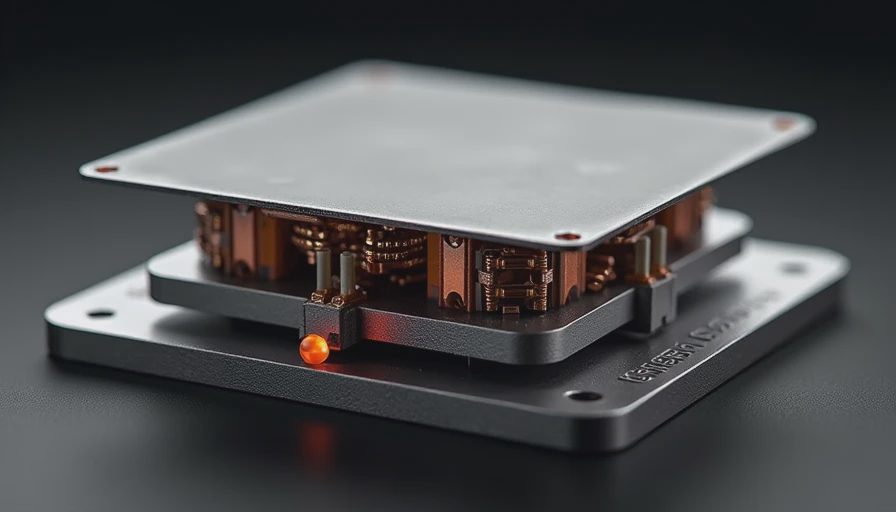
A planar magnetic driver uses a thin, flat diaphragm with conductive traces, suspended between magnets. The whole surface is driven more evenly than a traditional dynamic driver, which is pushed from a voice coil at the center.
In practice this often produces:
Faster transient response and tighter control, especially in the bass
Lower distortion at higher volumes
A more uniform sound across the driver surface
Those are measurable traits. They are not automatic guarantees of a better listening experience. Implementation still matters more than the driver type. A well-executed dynamic can beat a mediocre planar in every way that counts for music.
Where the Advantage Is Real
The planar strengths show up most clearly in a few situations:
Complex, dense mixes. When a lot of things are happening at once, the extra control can keep the low end from getting muddy and the midrange from smearing.
Higher listening volumes. Planars often stay cleaner when you turn them up. Dynamics can start to compress or distort earlier.
Bass texture. Good planars tend to render bass notes as distinct pitches instead of a single bloated thump.
Long-term listening fatigue. Some (not all) planars avoid the slight dynamic driver “bloom” that can get tiring over hours.
If you listen to a lot of electronic, modern metal, orchestral, or anything with intricate low-end information, the differences are easier to hear. If you mostly listen to sparse acoustic music at modest volumes, the gap narrows dramatically.
Where the Hype Gets Ahead of Reality
A few common claims need to be tempered:
“Planars have infinite detail.” No. They can have excellent resolution, but detail retrieval still depends on tuning, pad design, and the rest of the chain.
“All planars need big amplification.” Some do. Many modern ones are efficient enough to run fine from a decent dongle or interface. The “you must buy a powerful amp” advice is often outdated or exaggerated.
“Once you go planar you can never go back.” Plenty of people, including me, happily switch between good dynamics and good planars depending on the situation.
“The wider soundstage is inherent to planars.” Soundstage has more to do with driver angle, pad geometry, and tuning than with the driver technology itself.
The technology is a tool. It is not a personality.
What I Actually Listen For in a Planar
When a planar crosses my desk, I care about the same fundamentals I apply to everything else, plus a few technology-specific checks:
Is the tuning sensible? A lot of early planars were bright or thin. The better modern ones have fixed that.
Does the bass have pitch and texture, or just slam?
How does it behave when the track gets busy?
Is the weight and clamping force tolerable for a full album?
Does it still sound good from a modest source, or does it only wake up with serious power?
Comfort matters more than most planar fans admit. Some of these headphones are heavy. A technically brilliant driver is useless if you want to take it off after twenty minutes.
Who Should Actually Buy One
Consider a planar if:
You already have a competent dynamic pair and want a different set of strengths
You listen to complex, bass-rich, or high-volume music regularly
You’re willing to prioritize performance over light weight and easy drivability
You’ve heard a few and know you like the presentation
You can probably skip them (or at least stop feeling like you’re missing out) if:
You mostly listen casually at low to moderate volumes
Comfort and low weight are non-negotiable
Your current dynamic headphones already satisfy you
You’re still building your first proper setup (get the $200 dynamic sweet spot right first)
The Honest Bottom Line
Planar magnetic headphones are not magic. They are a different set of engineering compromises that can deliver excellent results when the rest of the design is competent. The best ones offer speed, control, and low distortion that are hard to match at the same price with dynamics. The worst ones are heavy, power-hungry, and tonally weird.
Do the same thing you should do with any headphone: look at consistent measurements, listen longer than the hype lasts, and decide whether the actual differences matter to the music you play.
Trust your ears. But measure first.
The hype is sometimes real. It’s just not automatic.




No notes yet — write the first one.