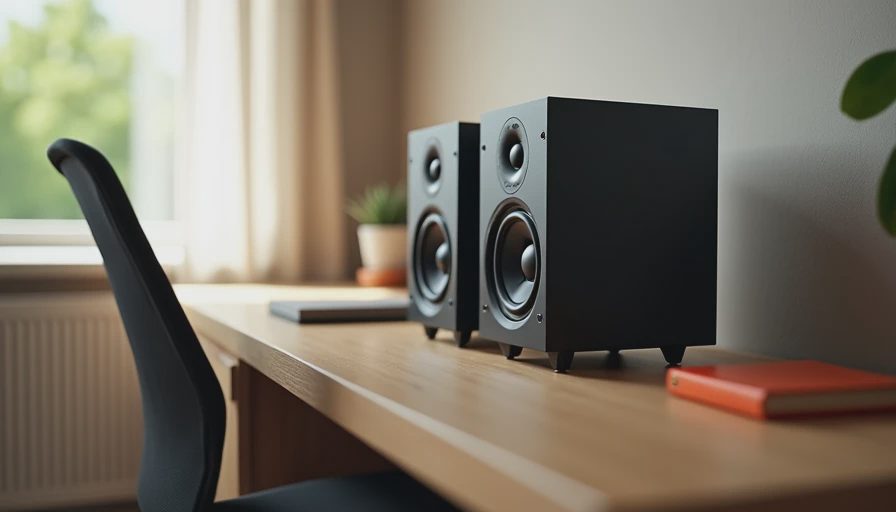
You Can Stop Shopping Sooner Than You Think
Most people who get interested in better sound fall into the same loop. They buy something decent. Then they read about something better. Then they upgrade. Then the cycle repeats. The finish line keeps moving.
I’ve been on both sides of that loop—first as a working engineer chasing reliable tools, later as someone who simply wanted to enjoy music at home without turning it into a second job.
A well-chosen $500 speaker system, set up with basic care, is enough to make most of the upgrade itch disappear. Not because it is perfect. Because it is good enough that the music becomes more interesting than the shopping.
Here’s how I would build it right now if I had to start from zero and stay under five hundred dollars.
The Governing Principle: Speakers First, Everything Else Second
In any system the transducers do the hard work. They have to move air in a real room and create a believable version of the recording. Electronics support that job. They rarely rescue it.
So the budget split is deliberate:
Speakers: $320–400
Amplification / source integration: $80–150
Necessary cables, isolation, and small setup aids: the rest
No exotic DACs. No cable elevators. No “entry-level” products that exist mainly to upsell you later.
Active Speakers Are the Default Recommendation
At this price, powered (active) speakers win for most people. You get amplification matched to the drivers, often some useful boundary or EQ controls, and a much simpler signal path. You also avoid the common failure mode of pairing decent passive speakers with a weak or noisy budget amp.
Look for:
A credible 4- to 5.25-inch mid-woofer
A well-behaved tweeter (silk dome or controlled metal dome)
Clean enough output for nearfield or small-room listening
Analog inputs as a baseline; digital inputs are a convenient bonus
Real-world reviews and measurements that show even tonal balance rather than exaggerated bass or treble
Several current models in this range will outperform passive systems that cost the same once you factor in a separate amplifier.
Source: Keep It Simple and Transparent
You almost certainly already own a good enough source.
A recent audio interface
A clean USB DAC dongle
The headphone/line output from a laptop or phone (with a simple adapter if needed)
A streamer or computer running a higher-quality streaming tier
Feed a clean line-level signal into the active speakers and stop. The differences between competent modern digital sources at this level are smaller than the differences created by speaker placement and room interaction.
If you want one small upgrade, spend it on better isolation pads or short stands rather than another converter.
Placement Still Matters More Than the Extra Hundred Dollars
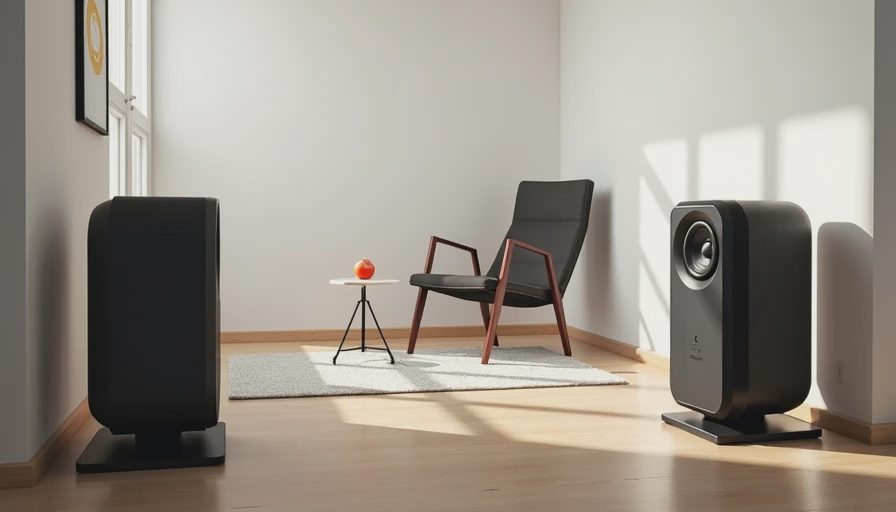
Even the best $400 speakers will sound ordinary if they are shoved against the wall, sitting too low, or aimed nowhere near your ears.
Do the free work:
Pull them away from the wall behind them (start with 8–12 inches)
Form a rough equilateral triangle with your listening seat
Set tweeter height near ear level
Experiment with toe-in until the center image stabilizes and the treble sounds natural
Add a rug on hard floors if you can
These steps routinely produce larger improvements than swapping to a more expensive model inside the same budget.
A Concrete $500 Example Build
One realistic way to hit the target today:
Capable active bookshelf / desktop speakers with solid measurements and neutral-to-slightly-warm tuning: ~$350–380
Necessary cables and a pair of basic isolation stands or pads: ~$40–60
Any remaining money toward a simple USB interface or quality dongle if you don’t already have a clean source
That is a complete, functional system. It will play cleanly at normal to moderately loud levels, keep voices natural, and give you enough resolution to hear the difference between good and mediocre recordings.
It will not reproduce the last octave of bass like a subwoofer-assisted system. It will not fill a large open-plan living room for a party. Those are different jobs.
What This System Is Designed to Do
Make daily listening more engaging and less fatiguing than laptop speakers, soundbars, or cheap Bluetooth boxes
Reveal enough of the recording that you start caring about master quality and mix balance
Stay out of the way so the music, not the equipment, holds your attention
Give you a stable reference that makes future upgrade decisions clearer and less impulsive
What It Is Not Designed to Do
Impress people who measure status by the number of boxes and the thickness of the cables
Compete with a carefully optimized $2,000+ system in absolute scale, extension, or refinement
Fix a bad room all by itself
Those limitations are fine. The goal is not to end the hobby. The goal is to reach the point where the hobby stops feeling like a requirement.
How to Live With It Long Enough to Know
Set the system up. Play music you actually like for two weeks without reading reviews of the next thing. Notice whether you reach for the system more often. Notice whether you listen longer. Notice whether the urge to shop has quieted down.
Most people discover that once the sound is honest and the setup is stable, the constant upgrade pressure loses a lot of its force.
The Bottom Line
A thoughtfully chosen $500 speaker system, placed with care and fed by a clean everyday source, is enough to make most of the “hi-fi” chase feel optional rather than urgent.
You do not need golden ears.
You do not need a trust fund.
You need competent transducers, correct geometry, and the discipline to stop adding boxes once the music is already enjoyable.
Trust your ears. But measure first.
Then build the system, sit down, and let the records do the rest.
No notes yet — write the first one.