The Endless Argument That Misses the Point
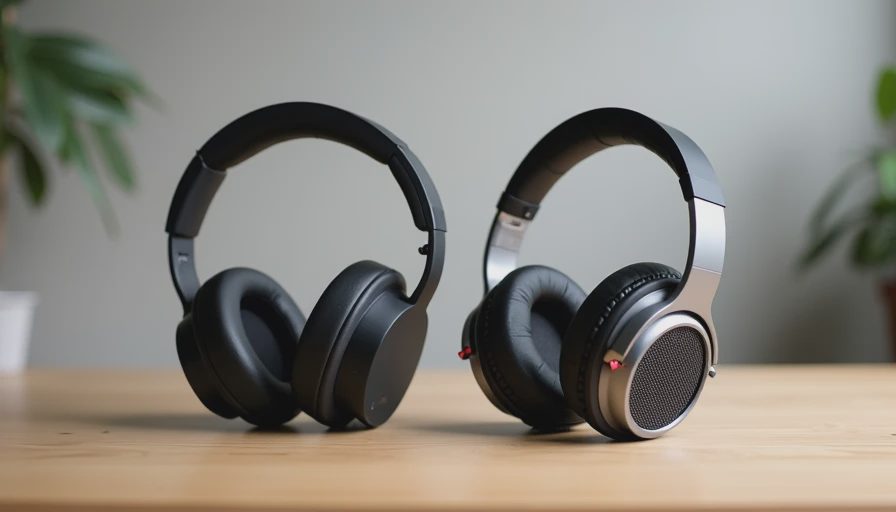
Open-back versus closed-back is one of those audio debates that generates more heat than light. One side talks about “soundstage” and “air” like they’re spiritual experiences. The other side acts like anything that leaks sound is useless.
Both positions are mostly unhelpful.
I’ve used both types for professional work and for pure enjoyment. The difference is real. It is also simpler and more practical than most of the conversation suggests. This is not a sacred technical hierarchy. It is a set of trade-offs that should match how and where you actually listen.
What the Two Designs Actually Do
Closed-back headphones seal the earcup. The driver operates in a more contained volume of air. This usually means:
Better isolation from outside noise
Less sound leaking out to the room
Often stronger bass impact because the rear wave is trapped
Higher chance of cup resonance or a slightly “boxed-in” quality if the design is mediocre
Open-back headphones allow air (and sound) to pass through the earcup. This usually means:
A more natural sense of space and less internal reflection
Sound that leaks freely into the room
Very little isolation from your environment
Often a more relaxed, speaker-like presentation when the design is good
Neither approach is automatically more accurate. A well-designed closed-back can be extremely neutral. A poorly designed open-back can still sound weird. The enclosure type sets the boundaries; the rest of the engineering decides the result.
The Real-World Decision Factors
Forget abstract ideas about “soundstage height” for a minute. Ask these questions instead:
Where do you listen?
Quiet home office or dedicated room → open-back is viable.
Shared apartment, office, public transit, or anywhere with other humans → closed-back is the practical choice.
Do you need isolation?
If outside noise bothers you or you need to keep your music private, closed-back wins. Open-backs are essentially speakers strapped to your head.
How important is long-session comfort?
Many open-backs feel less “on your head” because of lower pressure and better heat dissipation. Many closed-backs can get warmer. This varies widely by model, but the tendency exists.
What kind of presentation do you prefer?
Some people like the more contained, direct feel of a good closed-back. Others prefer the more open, less congested feel of a good open-back. Neither preference is wrong.
Common Myths That Need to Die
“Open-backs are always more accurate.”
No. Accuracy comes from the total design—driver, tuning, pads, and structure. There are neutral closed-backs and colored open-backs.
“Closed-backs can’t have good soundstage.”
They usually present a more intimate image, but the better ones still create a convincing sense of space. “Soundstage” is not a single number that open-backs automatically win.
“You need open-backs for mixing.”
Plenty of engineers mix on closed-backs when isolation is required. The classic studio headphones of several decades were closed. What matters is knowing your tools.
“Open-backs are more fatiguing.”
Fatigue comes from bad tuning, high distortion, or excessive clamping—not from the presence or absence of a solid cup.
How I Choose for Different Situations
Desk listening in a quiet room: I reach for open-backs more often. The presentation feels less like headphones and more like small speakers.
Travel, calls, shared spaces: Closed-backs only. Isolation and privacy matter more than the last bit of openness.
Critical checking of a mix on headphones: I use both. Closed for isolation and a different perspective, open for a second opinion on balance and space.
Long recreational sessions at home: Whichever pair is more comfortable and tonally right for the music that day.
The best answer for most people is eventually “own one of each” once the budget allows. Until then, choose the type that matches your primary environment.
Practical Buying Filters
If you are deciding between open and closed in the same price range:
Be honest about noise and privacy needs first. Everything else is secondary.
Prioritize measured tonal balance and comfort over the open/closed label.
Try to listen to both types with the same tracks if possible.
Remember that pad condition and seal (for closed) dramatically affect the result.
Ignore any review that treats one type as morally superior.
The Bottom Line
Open-back and closed-back headphones are tools optimized for different constraints. One is not the grown-up version of the other. One does not automatically reveal more music.
Match the design to your room, your need for isolation, and your tolerance for sound leakage. Then judge the individual headphone on the same criteria you should always use: tonal balance, distortion, comfort, and whether it still sounds good after the novelty wears off.
Trust your ears. But measure first.
And stop arguing about which design is “better.” Better for what, and for whom?




No notes yet — write the first one.