Streaming sound quality is good enough to expose weak links in your system, but it is not magic dust that fixes bad headphones, a noisy room, or careless settings. After 12 years mixing records in Nashville studios, I have learned that most audible improvements come from sensible signal paths and better listening habits, not expensive accessories. The goal is simple: get a clean version of the music to your ears, then spend money where it actually changes what you hear.
What streaming sound quality actually means
A streaming service takes a master recording, compresses it into a digital file, and sends it to your phone, computer, streamer, or smart speaker. The important variables are format, bitrate, sample rate, mastering, and playback settings. Lossy formats such as AAC and Ogg Vorbis remove information to reduce file size. Lossless formats preserve the data from the delivered master, but lossless does not automatically mean better. A poorly mastered album in FLAC can sound worse than a well-mastered AAC version.
Bitrate describes how much data is used each second. A service offering 256 or 320 kilobits per second can sound remarkably clean, especially through ordinary wireless earbuds. Lossless tiers typically use much more data and can matter when you have revealing headphones, a quiet room, and carefully matched comparisons. The difference is often subtle rather than dramatic. If one version sounds much louder, your brain will usually prefer it, so level matching matters before you judge anything.
Mastering is the part many buyers overlook. Two releases of the same album can have different EQ, dynamics, and overall loudness. A newer remaster may have brighter treble and heavier compression, while an older version might sound more relaxed. No subscription tier can repair clipping or an aggressive master. Streaming sound quality starts with the file, but it ends with the entire chain between that file and your ears.

Choose the right service and settings
For most listeners, Spotify, Apple Music, YouTube Music, Amazon Music, and Tidal all offer enough quality for enjoyable daily listening. Their catalogs, apps, recommendations, and device support can matter more than small codec differences. Apple Music and Amazon Music include lossless options, while Spotify has long emphasized flexible quality levels and reliable discovery. Tidal places more attention on high-resolution and immersive formats. None is universally best.
Start by selecting the highest practical quality for Wi-Fi and downloaded music. If your cellular plan is limited, use a lower setting away from home and download favorite albums at the better setting. Turn off any data-saving mode that silently reduces quality. Also check whether the app applies normalization. Volume normalization is useful for playlists, but it can change perceived impact by lowering louder tracks. That does not ruin the music, though it can confuse comparisons.
Disable equalizer presets unless you know what they do. A setting labeled Rock, Bass Boost, or Vocal often applies broad frequency changes that add boom or harshness. If your headphones sound too bright, a small treble reduction can help; if bass disappears on a particular model, a modest low-frequency lift may be reasonable. Make one change at a time and return to the original setting often. Streaming sound quality is easier to evaluate when the processing is predictable.
Your playback device matters more than the logo
The phone or laptop is rarely the main problem. Modern smartphones have competent digital audio hardware, and many laptops deliver clean output through their headphone jacks. The bigger issues are cheap earbuds with uneven frequency response, Bluetooth limitations, poor fit, and background noise. A $100 wired headphone with a balanced response can reveal more music than a $500 model with exaggerated bass and treble.
Bluetooth is convenient, and convenience counts. Current Bluetooth implementations can sound very good, but the codec used depends on both the source and the headphones. AAC, aptX, LDAC, and other options involve different tradeoffs in compatibility, bandwidth, and battery life. Do not buy a device solely because the box lists a premium codec. If your phone and headphones negotiate a basic codec, the result can still be enjoyable. A stable connection is worth more than a theoretical specification you cannot use.
For wired headphones that need more power, a headphone amplifier can help with volume and control. It cannot transform a poorly tuned headphone into a great one. A basic USB DAC from FiiO, Topping, iFi, or another established manufacturer is usually enough; spending $1,000 on a DAC rarely produces a proportional improvement. Streaming sound quality benefits first from a good transducer, a secure seal, and sensible volume.
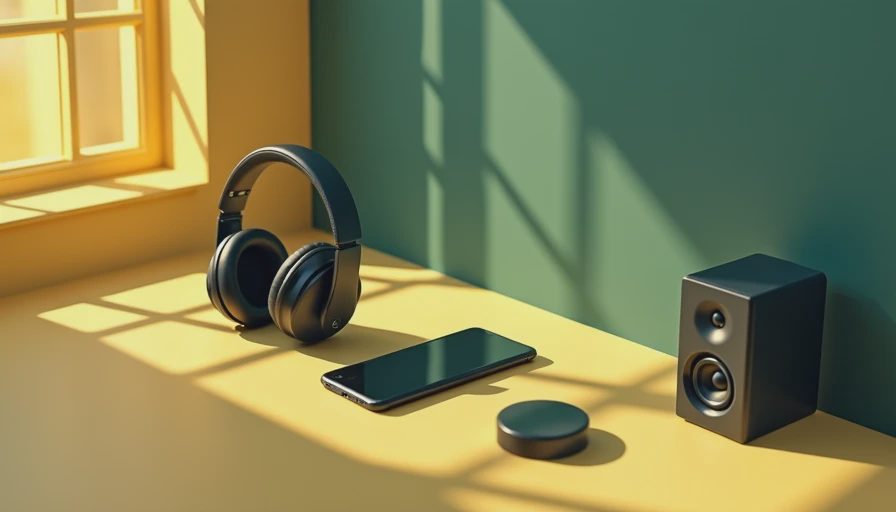
Speakers, rooms, and placement win the upgrade race
If you listen through speakers, room acoustics usually dominate small format differences. Place bookshelf speakers on stands or a solid surface, keep tweeters near ear height, and form a rough triangle between the speakers and your listening position. Avoid pushing rear-ported speakers directly against a wall. Moving them even a few inches can reduce bloated bass and improve vocal clarity.
The room itself creates peaks and dips as sound reflects from walls, floors, and furniture. A bare room can make treble feel sharp and bass uneven. You do not need foam panels covering every surface. A rug, curtains, a sofa, and a full bookshelf can reduce reflections in an ordinary living room. If you add a subwoofer, adjust its level conservatively. More bass is not automatically more detail; it often masks kick drums, bass guitar, and lower vocal notes.
Use familiar recordings to test changes. I reach for well-recorded acoustic tracks, dense rock mixes, and spoken-word material because each exposes different problems. Listen for vocal consonants, cymbal decay, bass notes that linger too long, and whether the mix remains clear at a lower volume. Those clues tell you more than vague claims about cinematic width or luxurious musicality.
A practical upgrade path under real budgets
With a $50 budget, improve fit, replace damaged ear tips, and check your app settings. With $100 to $250, prioritize headphones or speakers with measured frequency response and return policies. Brands such as Sennheiser, Audio-Technica, Sony, JBL, and Koss offer useful options across different styles and prices, although every model still deserves an individual review.
At $300 to $700, consider a better headphone, powered speakers, or room correction if your listening space is difficult. A compact streamer can be worthwhile when it simplifies control and keeps your phone free, but it does not automatically improve the digital file. Avoid spending on premium cables, demagnetizers, or vague power accessories before addressing placement and transducer quality. Streaming sound quality improves when the signal path is competent from source to speaker, not when one decorative link becomes expensive.
Before buying, make a short checklist. Confirm the service quality setting, identify the connection and codec, match volume between products, listen to three familiar recordings, and use the return window. Give yourself several days rather than trusting a five-minute showroom impression. Fatigue can make bright gear seem exciting at first and irritating later.
The honest bottom line
Lossless streaming is useful, but it is not a substitute for good mastering, accurate headphones, or sensible speaker placement. For many people, a well-tuned $150 setup will beat a poorly configured $1,500 system. Streaming sound quality is best treated as one part of a chain, not a badge that makes every component better.
Trust your ears. But measure first. Check frequency-response graphs when they are available, level-match comparisons, and ignore anyone promising that a cable alone will reveal hidden musical dimensions. I sometimes receive review units, and some links on this blog may earn a commission. That does not change the method: the recommendation has to survive measurements, repeat listening, and a place in a normal person’s budget.


No notes yet — write the first one.