If you have searched why studio monitors for home listening keep appearing in music forums, the short answer is accuracy. Studio monitors are designed to reveal what is actually in a recording, not to add a generous scoop of bass or a shiny treble boost. That can make them useful for producers, vinyl listeners, gamers, and anyone who wants to hear familiar albums more honestly.
I spent 12 years mixing records in Nashville rooms filled with Genelecs, ATCs, Yamaha NS-10s, and plenty of less glamorous workhorses. The lesson was consistent: a speaker does not need an exotic cabinet or a $5,000 cable to be useful. It needs a reasonably smooth response, low distortion at your listening level, and sensible placement. The room still matters more than the logo on the front panel.
Why studio monitors for home use sound different
The main difference is the design goal. Many consumer speakers are voiced for immediate excitement. That often means extra low bass, softened midrange, or elevated treble. Those choices can make a quick showroom demo sound impressive, but they can also hide muddy vocals and exaggerate cymbals.
Why studio monitors for home listening appeal to me is that they usually aim for a flatter frequency response. “Flat” does not mean sterile or lifeless. It means a kick drum is less likely to be inflated, a singer is less likely to disappear behind a midrange dip, and a guitar amp has a more believable edge. A neutral speaker gives you a better starting point for judging an album, a mix, or a streaming service.
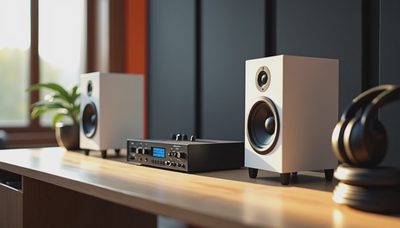
Most affordable monitors are active, meaning each speaker has built-in amplification. You do not need a separate stereo amplifier, and the amp is matched to the drivers by the manufacturer. Connect an audio interface, computer, mixer, or streamer with the appropriate cables, set the gain carefully, and you are ready to listen.
There is a tradeoff. Nearfield monitors are intended to work from a short distance, often three to five feet away. They can sound overly direct if you place them across a large living room. Many also lack a remote control, automatic standby, or a simple wireless connection. These are practical inconveniences, not evidence that the speaker sounds worse.
How to choose monitors for a bedroom or office
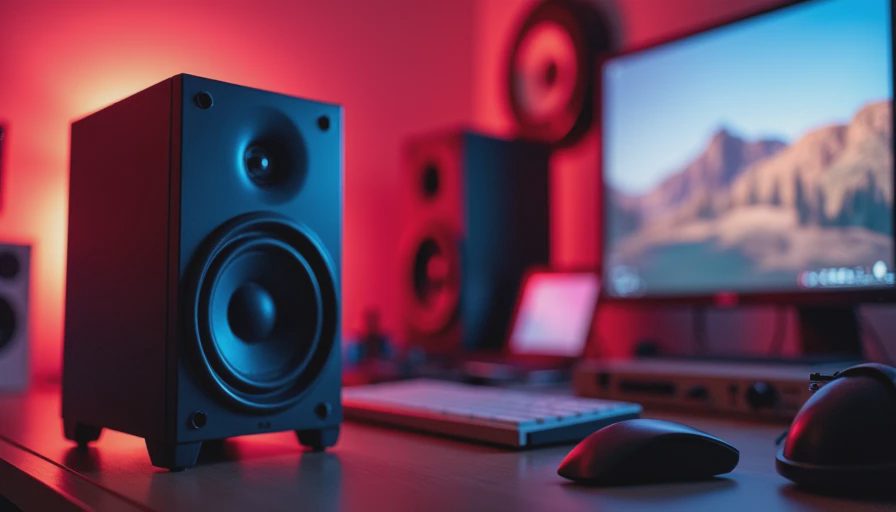
Start with room size and listening distance, not internet hype. A compact five-inch model is usually a sensible choice for a desk or small bedroom. The Yamaha HS5, JBL 305P MkII, Kali Audio LP-6 V2, and Adam Audio T5V are common options in the roughly $200 to $500 per pair range, depending on sales and regional pricing. They are not identical, but each comes from a manufacturer with real studio experience.
For a larger room, an eight-inch woofer can produce deeper bass and higher output. That does not automatically make it better. A larger driver can excite room modes more aggressively, creating one-note bass near a wall while leaving another seat thin. If you cannot place the speakers several inches away from the wall, a five- or six-inch model plus a separate subwoofer later may be easier to control.
Look for useful controls on the back. High-frequency and low-frequency trim switches can help compensate for a bright desk, reflective side walls, or close wall placement. Balanced XLR or TRS inputs are preferable when your interface supports them because they reject hum over longer cable runs. Unbalanced RCA inputs are perfectly workable in a short desktop setup.
Do not ignore hiss. Some active monitors produce a faint idle noise when your ear is close to the tweeter. That is not usually audible from a normal listening position, but it can annoy you in a quiet office. Reviews with measurements and careful listening notes are more helpful here than a brand’s claim that a cabinet is “professional.”
Placement matters more than a premium cable
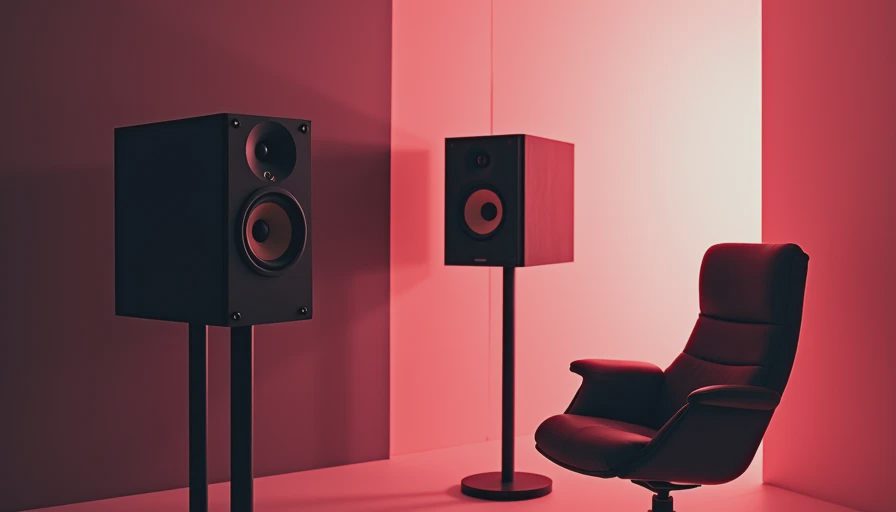
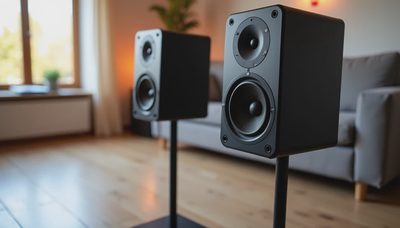
Put the tweeters roughly at ear height and form an equilateral triangle between your head and the two speakers. Angle each monitor toward you rather than pointing both straight ahead. Keep the left and right distances similar, and avoid placing one speaker in a corner while the other sits in open space.
A desk can create a strong reflection from its hard surface. Stands, foam isolation pads, or even carefully placed monitor platforms can reduce that problem, though they cannot fix every room interaction. Start with the speakers around a foot from the front wall, then move them in small steps while listening to a bass-heavy track. If the low end changes dramatically with tiny movements, your room is contributing more than the speaker.
Why studio monitors for home listening can be the wrong question if the room is untreated is simple: no monitor can erase physics. A $300 pair correctly positioned often beats a $1,500 pair shoved into a corner. Curtains, a rug, bookshelves, and soft furniture can reduce reflections, but do not cover every wall with foam and expect professional acoustics. Broadband absorption at reflection points is more useful when treatment is appropriate.
Are studio monitors good for casual music listening?
Yes, if you enjoy detail and do not require a heavily colored presentation. A well-designed monitor can make bass lines easier to follow, place vocals more consistently between the speakers, and expose compression or distortion in older recordings. That honesty is rewarding with acoustic music and small ensembles, but it can also reveal harsh masters that a warm consumer speaker would soften.
This is where personal taste matters. Someone who wants nightclub-style bass at low volume might prefer a consumer system with a subwoofer. Someone who listens late at night may prefer headphones because monitors need a little space and can disturb other people. Studio monitors are not automatically superior; they are tools optimized for a particular job.
For a first setup, I would rather see a listener buy JBL 305P MkII or Kali LP-6 V2, a basic USB interface such as a Focusrite Scarlett Solo, and decent balanced cables than spend the same money on exotic wire. If you need a direct connection from a television, look for a monitor controller, DAC, or interface with the correct optical or analog input. Avoid repeatedly turning the rear-panel volume knob to maximum; establish a clean gain structure and leave some headroom.
A practical buying plan
Set a total budget before browsing. Around $250 to $400 can get a capable pair for a desk. Around $500 to $800 opens the door to better low-frequency extension, quieter electronics, or more flexible controls. Reserve another $40 to $120 for stands, isolation, and cables if your existing setup does not include them.
Next, measure the listening triangle. If your desk is only three feet wide, huge eight-inch cabinets are an awkward choice. Listen to music you know well: a dry vocal, a bass-heavy electronic track, a sparse jazz recording, and a dense rock mix. Notice whether the vocal remains clear when the bass enters, whether cymbals become tiring, and whether bass notes sound even as you move your head.
Finally, buy from a retailer with a clear return policy and compare measurements from independent reviewers. Why studio monitors for home listening works as a search topic is that people want a plain answer, but there is no universal winner. The right model is the one that fits your room, connection needs, tolerance for hiss, and preferred presentation.
My bottom line is straightforward: studio monitors are worth considering when accuracy matters more than instant showroom excitement. Start with placement, choose a proven affordable model, and improve the room before chasing upgrades. Trust your ears. But measure first.
This article may contain affiliate links. If you purchase through one, I may earn a commission at no extra cost to you. Review units, when provided, do not guarantee a positive assessment.

No notes yet — write the first one.