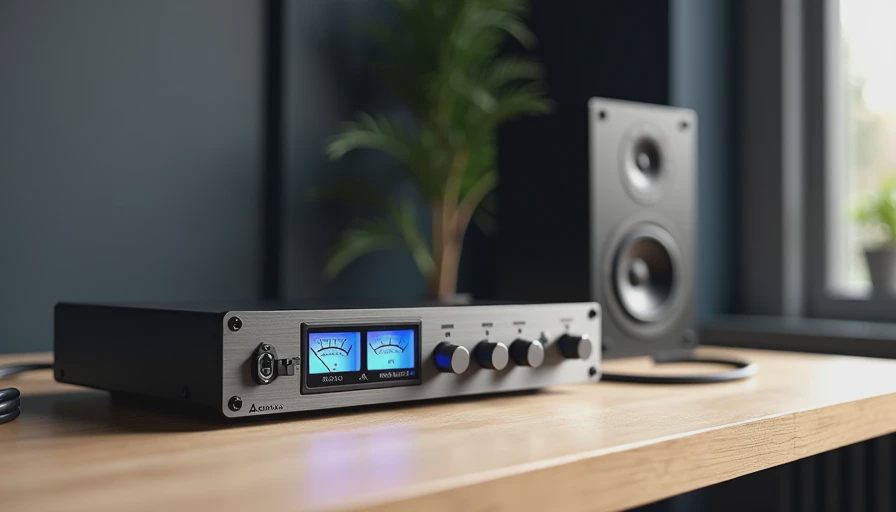
The Expensive Habit We Need to Break
I see it constantly. Someone buys a solid audio interface for recording or production. Then, a few months later, they start reading forums and watching videos that convince them the DAC inside that interface is “just okay for tracking” and they need a proper audiophile converter for listening.
So they spend $300, $600, sometimes over a thousand dollars on a separate DAC. They plug it in, level-match poorly, and declare a night-and-day improvement.
Most of the time, the improvement is either imaginary or the result of a louder volume, a different filter, or simply the excitement of a new box.
Your audio interface is already a great DAC. In many cases it’s a better DAC than the dedicated unit you’re about to buy.
What a DAC Actually Has to Do
A digital-to-analog converter has one job: take the numbers and turn them into a clean analog voltage. Modern chipsets from ESS, AKM, Cirrus, and others do this with vanishingly low distortion and noise when they are implemented competently.
The differences that remain are mostly about:
Output stage design and whether it can drive the next device cleanly
Power supply quality and isolation from digital noise
Reconstruction filter behavior (the part that can actually sound slightly different)
Features like balanced outputs, volume control quality, or extra inputs
Notice what’s missing from that list: magical “musicality” that only appears when the chassis costs more than a decent pair of speakers.
I’ve run critical listening and mix checks through the headphone outputs and line outputs of interfaces from Universal Audio, Focusrite, RME, Audient, SSL, and Motu. When level-matched and connected properly, the transparent ones disappear. That’s the goal.
Why Interfaces Often Beat Budget and Mid-Range Dedicated DACs
Audio interfaces are designed to work in real studios with real computers, real ground loops, and real electromagnetic mess. That forces certain engineering choices:
Better attention to clocking and jitter management in many cases
Properly designed line outputs that can drive decent cable runs
Headphone amps that can actually power common studio headphones
Driver stability and low-latency performance that dedicated “audiophile” DACs rarely match
A lot of dedicated DACs in the $200–800 range are essentially a popular chip, a basic power supply, a pretty case, and marketing. Some are excellent. Many are not meaningfully better than the DAC already sitting in an interface that costs the same or less.
I still own dedicated DACs. Some of them earn their keep through better headphone amplification, more convenient remote control, or cleaner implementation of a specific filter I like. But “it has a better chip” is almost never a sufficient reason.
The Real Reasons People Hear Differences
When someone swaps from their interface to a new DAC and hears a big change, I ask a few questions:
Did you level-match to within 0.1 dB? Volume differences are the oldest trick in the book.
Are you using the same outputs and cables?
Did the new DAC introduce a different reconstruction filter or a slight change in frequency response?
Are you now using a higher-quality headphone amp stage that the interface lacked?
How much did you want the new DAC to sound better?
Confirmation bias is powerful. So is the placebo effect of a new box with a higher price tag. I’ve been fooled by it myself in the past. Measurement and careful level-matched switching are the cure.
When a Separate DAC Actually Makes Sense
There are legitimate reasons to add one:
Your interface headphone amp is weak and you need more clean power for demanding headphones.
You want a dedicated volume control and source switching for a pure listening chain.
You’re using a very cheap interface whose line outputs are noisy or poorly designed.
You need specific features (DSD, particular filter options, multiple digital inputs) that your interface lacks.
You’re building a second system in another room and don’t want to run the interface full-time.
In those cases, buy the separate DAC with clear eyes. Just don’t do it because a reviewer said the interface DAC was “not audiophile grade.”
A Simple Test You Can Run Today
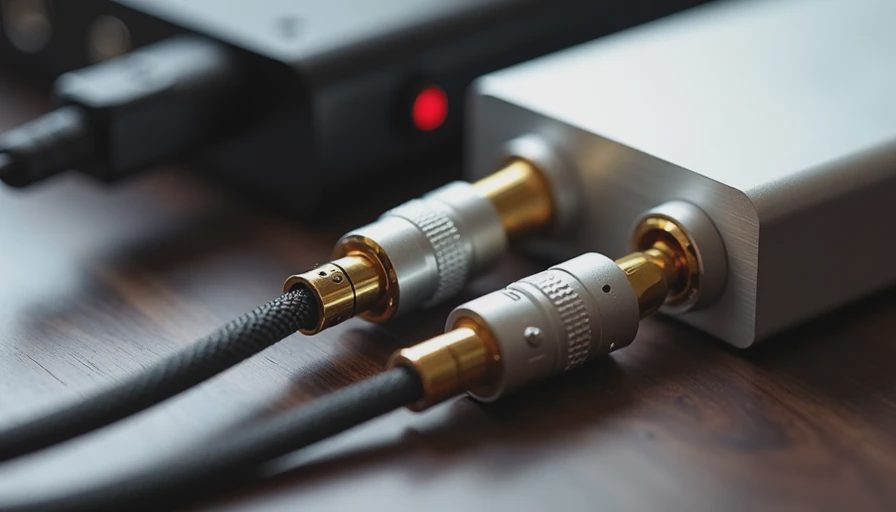
If you already own an interface, try this before spending money:
Connect the line outputs of your interface directly to your amp or active speakers.
Play music you know well at your normal volume.
Then insert the external DAC you’re considering, match levels carefully with a test tone or pink noise, and switch back and forth.
Be honest about what you hear when you don’t know which one is playing.
Most people are surprised how small the differences become. Sometimes they disappear entirely.
The Interface as the Center of a Smart System
One of the quiet advantages of using a good interface as your DAC is system simplicity. One box handles computer audio, monitoring, headphone listening, and often recording. Fewer cables. Fewer power supplies. Fewer things to go wrong.
In a desktop or small-room setup, that elegance matters. I’ve run entire listening and light production systems off a single high-quality interface for years. The moment I stopped treating the interface as “just for recording” and started treating it as a competent source, my system got better and cheaper at the same time.
Final Reality Check
The DAC chip itself stopped being the bottleneck for most listeners a long time ago. Implementation still matters. Features still matter. Matching the device to your actual use case matters most.
If your current interface already gives you clean, quiet, tonally neutral conversion and enough output to drive your headphones or speakers properly, you are not leaving meaningful performance on the table by skipping a separate DAC.
Save the money. Put it toward better speakers, better headphones, acoustic treatment, or simply more records.
Trust your ears. But measure first.
And stop letting the audiophile industrial complex convince you that the perfectly good converter you already own is somehow beneath you.
No notes yet — write the first one.