ou Don’t Need to Spend Thousands to Hear Your Music Properly
I’ve watched too many people freeze at the entrance of the audio hobby. They read about $2,000 DACs, $5,000 speakers, and mystical cables, then decide the whole thing is out of reach. So they keep listening on the same pair of earbuds or the soundbar that came with the TV.
That’s backwards.
A carefully chosen $300 system, set up with a little intention, will outperform the majority of hastily assembled “starter” systems that cost two or three times as much. The goal isn’t to impress the internet. The goal is to play music in a way that makes you want to listen longer.
Here’s how I would build it today if I had to start from zero.
The Core Principle: Put the Money Where It Matters
In any system the speakers do the heaviest lifting. They turn electricity into sound in a real room. Everything else is upstream support. That means the biggest chunk of a $300 budget should go toward the transducers.
My current recommended split looks roughly like this:
Speakers: $180–220
Source + amplification: $60–100
Cables, stands or isolation, and small tweaks: the rest
Notice what’s missing: a fancy separate DAC, a tube buffer, or anything with the word “audiophile” in the product name.
The Speakers: Active Is the Smart Play in 2026
For this budget I strongly prefer powered (active) speakers. You get a matched amplifier, often some useful EQ or boundary switches, and you eliminate an extra box and a set of cables. Modern Class-D amplification in this price range is clean and loud enough for nearfield or small-room listening.
Look for something with:
A credible mid-woofer (4–5.25 inches is realistic here)
A silk-dome or well-behaved metal-dome tweeter
Rear or front porting that you can actually manage in a real room
Line-level inputs (RCA or 3.5 mm is fine; balanced is a bonus)
I’ve lived with several models in this range that disappear more successfully than passive speakers costing twice as much once you factor in a decent amp. The key is to prioritize even tonal balance over exaggerated bass or hyper-detailed treble.
The Source: Your Phone, Laptop, or Existing Interface Is Enough
If you already own a recent audio interface, use it. As I explained in the previous article, most of them contain perfectly competent DACs and headphone outputs. Feed the line outputs into your active speakers and you’re done.
If you don’t have an interface, a simple USB-C to 3.5 mm or RCA dongle from a reputable brand, or the headphone output from a laptop or phone, will get you 95 % of the way there for this budget. The differences between competent modern sources at this level are smaller than the differences between average and good speaker placement.
Streaming from Apple Music, Tidal, or Qobuz at their higher tiers is more than transparent enough. Spotify is still fine for discovery; just don’t use it as your only reference for judging the system.
Placement: The Free Upgrade Most People Skip
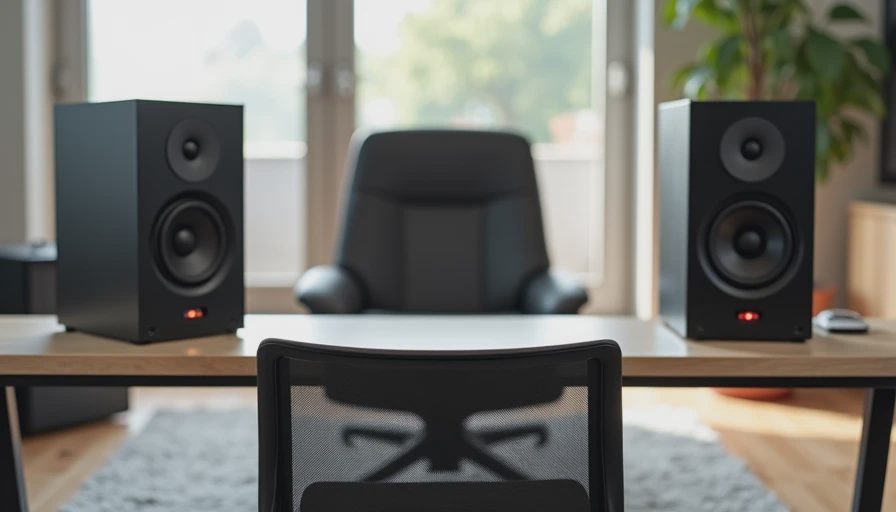
You can spend $300 on gear and still make it sound mediocre with bad placement. Or you can make a modest system sound surprisingly grown-up with ten minutes of attention.
Do this:
Form a rough equilateral triangle between the two speakers and your listening seat.
Keep the speakers at least 8–12 inches from the wall if they are rear-ported.
Aim the tweeters at your ears or just behind them (slight toe-in).
Get the speakers up to ear height. A pair of sturdy books, a simple desktop stand, or even a solid shelf works.
Put a rug on the floor between you and the speakers if the surface is hard.
These steps cost almost nothing and routinely produce a bigger improvement than swapping to a more expensive DAC.
A Realistic $300 Example Build (2026 Pricing)
Here’s one concrete way to hit the target without hunting for miracles:
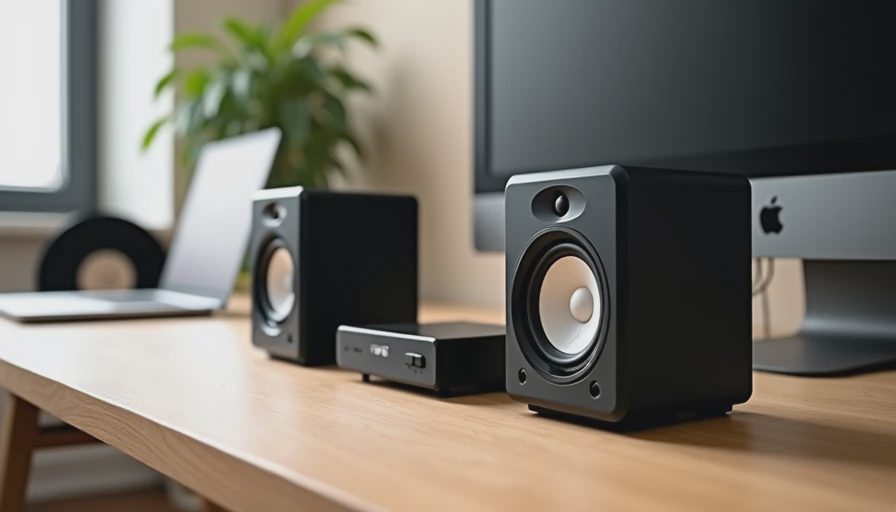
Active desktop speakers with a decent 5-inch woofer and clean treble: ~$200
Simple USB audio interface or quality dongle + short RCA cables: ~$50–70
Basic isolation pads or small stands + a few cable ties and a cheap measurement app: the remainder
That’s a complete system. It will play louder than you need for nearfield listening, stay clean at normal volumes, and give you a clear window into recordings instead of a colored interpretation.
I’ve mixed and checked records on systems that weren’t dramatically better than this when properly set up. The difference between “starter” and “serious” is often less about the gear and more about whether the person using it understands what matters.
What This System Will and Won’t Do
It will:
Play voices with natural tone
Keep bass tight enough that kick drums and bass guitars remain distinct
Stay enjoyable for full albums
Reveal obvious differences between good and mediocre recordings
It won’t:
Fill a large living room with party-level volume
Reproduce the last octave of subterranean bass
Compete with a well-set-up $2,000 system in absolute resolution or scale
That’s fine. The point of a starter system is to get you listening to music with enough fidelity that you start caring about the next incremental improvement for the right reasons—not because a marketing department told you your current setup is inadequate.
How to Live With It and Learn
Once the system is running, do two things:
Play music you actually love, not just audiophile demonstration tracks.
Occasionally check a few simple measurements if you’re curious—room response with a phone app and a decent measurement mic can teach you more than another gear review.
Live with the system for a month before you start itching for upgrades. Most people discover that the urge to buy something new drops dramatically once the music itself becomes the main event again.
Final Advice From Someone Who’s Bought Too Much Gear
The best $300 system is the one you actually set up correctly and then stop tinkering with long enough to enjoy. Studio monitors or well-chosen active speakers, a clean digital source you already own, and thoughtful placement will get you there.
You don’t need golden ears.
You don’t need a trust fund.
You need honest information and the willingness to put the speakers in the right place.
Trust your ears. But measure first.
Now go build the system and listen to something that matters to you.
No notes yet — write the first one.