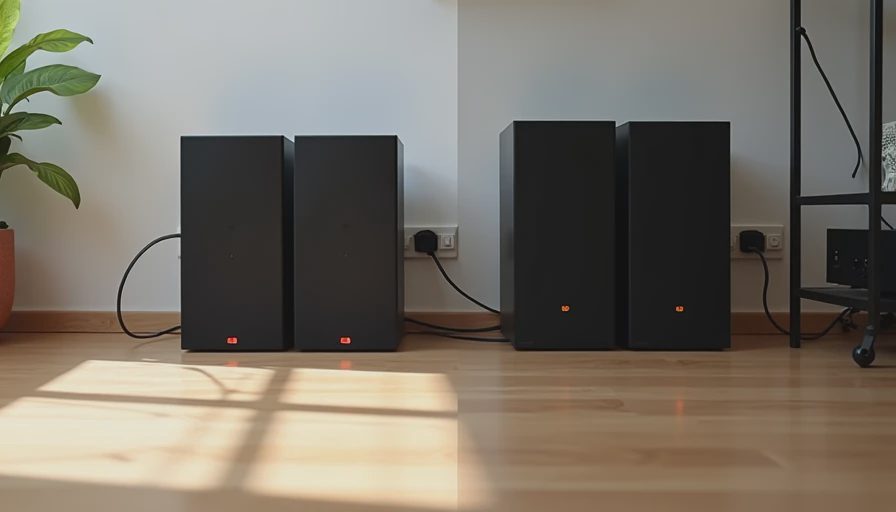
The Default Setup That No Longer Makes Sense for Most People
For decades the standard advice was simple: buy passive speakers, buy a receiver or integrated amp, run speaker wire, and call it a system. That model still works. It is no longer the automatic best choice.
Active (powered) speakers have improved dramatically. Amplification is built in, often matched to the drivers, and frequently includes useful DSP or boundary controls. The signal chain gets shorter. The number of boxes drops. In many real rooms the result is cleaner, more consistent sound for less money and less hassle.
I’ve used both approaches extensively—in studios and at home. In 2026, for the majority of desktop, nearfield, and small-to-medium living-room systems, I reach for active speakers first.
What “Active” Actually Means
Active speakers contain their own amplification. In better designs each driver (or group of drivers) gets its own amp channel, with the crossover happening before the amplification stage. This is different from a passive speaker that receives a full-range amplified signal and splits it with capacitors, inductors, and resistors inside the box.
The practical advantages that follow from a good active design:
Amplifiers can be optimized for the exact drivers they power
Crossovers can be more precise and less lossy
Protection and limiting can be built in
Room-compensation or boundary switches are easy to implement
You eliminate a separate power amp or receiver and the associated cables
None of this makes every active speaker automatically better than every passive one. It does change the value equation and the system complexity.
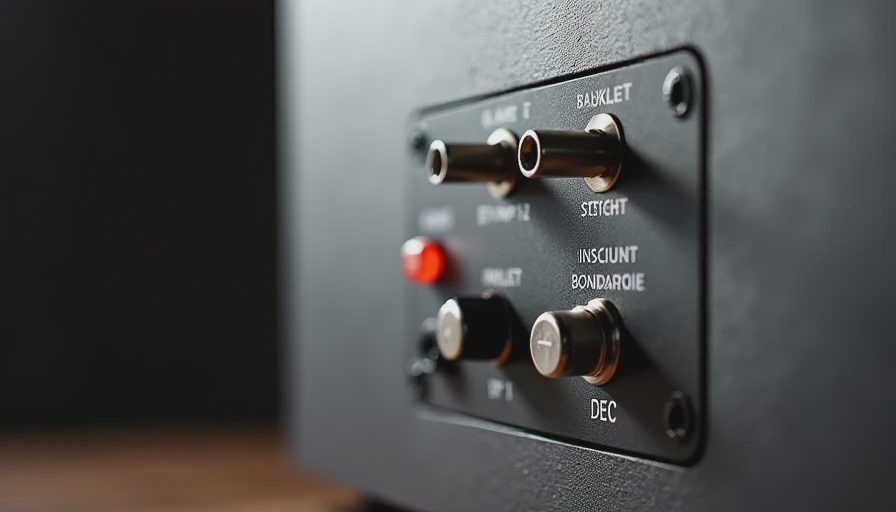
Where Active Speakers Win in Real Homes
Simplicity.
One pair of power cords, a single analog or digital cable from the source, and you’re done. No speaker wire to route, no amp to match, no extra box generating heat.
Performance per dollar.
At any given price point you are not paying for a separate amplifier chassis, power supply, and marketing story. More of the budget goes into the drivers, cabinet, and the amplification that actually moves the cones.
Consistency.
The manufacturer controls the entire electro-acoustic chain. That usually produces more predictable results than pairing random passive speakers with whatever receiver happens to be on sale.
Modern features.
EQ, boundary compensation, digital inputs, and even room correction show up more often and more usefully in active designs.
For desktop systems, nearfield listening, and smaller living rooms, these advantages compound quickly.
Where Passive Still Makes Sense
Passive speakers remain the better tool in some situations:
You already own a good amplifier or receiver you like
You want maximum flexibility to swap amps or bi-amp later
You need very high output levels in a large room (some large passive systems still scale further)
You prefer a specific passive model whose active equivalent doesn’t exist or costs far more
You are building a multi-channel home-theater system around an existing AVR
If any of those describe your situation, passive is still rational. It is just no longer the default recommendation for a new two-channel music system.
The Sound Question
People sometimes claim passive systems sound more “open” or “natural.” In my experience that difference usually traces back to specific implementation choices—crossover design, amp quality, or simply different tonal targets—rather than some inherent magic of passive crossovers.
A well-executed active speaker with a clean input stage and sensible tuning can be every bit as transparent and enjoyable as a good passive system. I’ve mixed and checked work on both. The better examples of each disappear and let the recording through. The worse examples of each impose themselves on the music.
What active designs reduce is the number of ways the system can go wrong between the source and the driver’s voice coil.
Practical Buying Considerations in 2026
When evaluating active speakers:
Look at the input options you actually need (analog RCA/XLR, digital optical/USB, Bluetooth as convenience only)
Check whether there are boundary or EQ switches and whether they are useful
Read measurements if available—especially frequency response and distortion at realistic levels
Consider how the volume control (if any) is implemented and whether you will use a source with its own volume
Pay attention to noise floor; some cheaper active designs hiss more than a good passive + amp combo
When staying passive:
Budget properly for amplification. A weak or noisy amp will limit the speakers.
Factor in the cost and routing of speaker cable.
Remember that “receiver” often means extra complexity and features you will never use for music.
A Simple Decision Framework
Choose active if:
You are starting fresh or simplifying
Your room is small or medium
You value fewer boxes and cleaner signal paths
You want good performance without becoming a system matcher
Choose passive if:
You already own amplification you trust
You have specific passive speakers you love
You need the flexibility or scale that your preferred passive models provide
For most people reading this site and building or upgrading a music-first system in 2026, active is the shorter path to better sound with less fuss.
The Bottom Line
The old passive-plus-receiver model is not obsolete. It is simply no longer the automatic winner. Active speakers have closed the performance gap and opened a convenience and value gap that is hard to ignore.
Fewer boxes. Matched amplification. Shorter signal path. Often better results for the money.
Ditching the receiver is not a compromise for most listeners anymore. It is the rational default.
Trust your ears. But measure first.
Then decide whether you actually need that extra box and those speaker cables—or whether the speakers themselves can do the job better on their own.


No notes yet — write the first one.