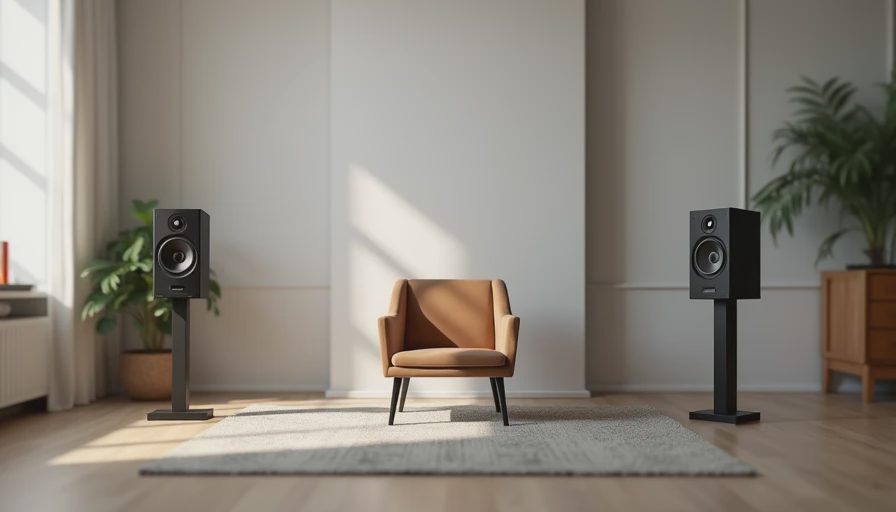
The Cheapest Improvement You’re Probably Skipping
I’ve lost count of the systems I’ve heard that were held back more by placement than by the gear itself. Nice speakers parked against the wall, toed in randomly (or not at all), sitting too low or too high, with the listening seat shoved into a bass null.
People will spend hundreds chasing a new DAC or a “better” cable. They won’t spend ten minutes moving the speakers.
That is backwards.
Speaker placement is one of the highest-leverage changes you can make in a small or medium room. It costs nothing, requires no new boxes, and routinely produces bigger improvements than swapping components at the same price level.
What Placement Actually Controls
Where you put the speakers (and where you sit) affects:
Bass response — peaks and nulls created by the room boundaries
Midrange clarity — reflections from the desk, wall, or side surfaces
Image focus and stability — how precisely instruments lock in place
Overall tonal balance — whether the system sounds thin, boomy, or relatively even
A speaker that measures well in an anechoic chamber can still sound uneven in a real room if the placement fights the acoustics. Conversely, a merely good speaker can sound surprisingly satisfying when the position works with the room instead of against it.
The Core Geometry That Matters
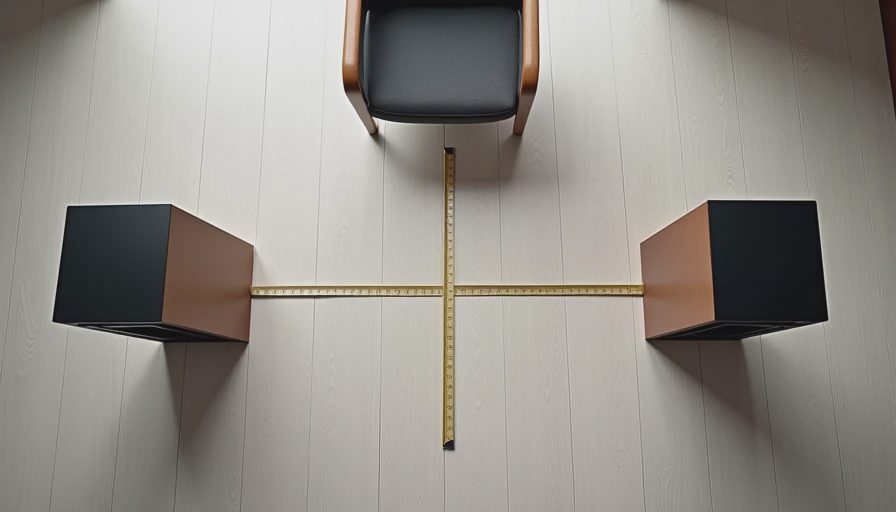
Start with three simple relationships:
Distance from the front wall (the wall behind the speakers). Most bookshelf speakers sound tighter and cleaner when pulled at least 8–18 inches away from the wall. Rear-ported designs are usually more sensitive to this than sealed ones. Moving them out reduces boundary bass reinforcement and gives the rear wave space to behave.
The equilateral triangle. The distance between the two speakers should be roughly equal to the distance from each speaker to your ears. This is a starting point, not a religion. Slightly wider or narrower can work depending on the speaker’s dispersion and your preference for image width versus focus.
Toe-in. Pointing the speakers directly at your ears (or just behind them) usually sharpens the center image and can tame excessive off-axis treble. Leaving them firing straight ahead often creates a wider but less precise image. Try both. The difference is often immediate.
Also get the tweeters close to ear height when you are seated. A few inches of vertical error is rarely catastrophic, but large mismatches can tilt the balance and soften focus.
Practical Steps You Can Do Today
Here’s a simple sequence that works in most untreated or lightly treated rooms:
Pull the speakers away from the wall behind them. Start with 12 inches and experiment.
Set the spacing so the speakers and your seat form a rough equilateral triangle.
Adjust toe-in until the center image feels solid and the treble doesn’t get harsh or dull.
Raise or lower the speakers (stands, isolation pads, or sturdy books) so the tweeters are near ear level.
Sit in your normal seat and play a few tracks you know well—one with steady bass, one with clear vocals, one with stereo width.
Move one variable at a time (distance from wall, spacing, toe-in) and listen again.
Small changes can produce obvious differences. Move the speakers in one-inch increments when you get close.
Desk and Nearfield Realities
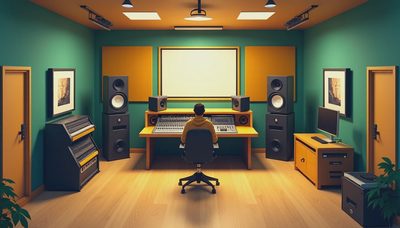
A lot of people use bookshelf speakers on a desk. That changes the priorities:
The desk surface creates a strong reflection that can smear the midrange or create a notch. Raising the speakers on stands or isolation platforms, or pulling them to the front edge of the desk, often helps.
Side walls and computer monitors become the nearest boundaries. Symmetric placement relative to the monitors and walls improves image stability.
You are usually sitting closer, so the direct sound dominates more than in a traditional living-room setup. That makes toe-in and vertical alignment even more important.
Nearfield listening is forgiving in some ways and unforgiving in others. Placement still matters.
What About Room Treatment?
Absorption and diffusion help, but they are secondary to getting the basic geometry right. A thick rug between you and the speakers, curtains on the window, and some absorption at the first reflection points on the side walls can clean things up further. None of that replaces correct placement. Do the free work first.
Common Mistakes I See Constantly
Speakers jammed against the wall “to save space”
One speaker closer to a side wall than the other
Listening seat pushed against the rear wall (bass becomes exaggerated or uneven)
Tweeters aimed at the listener’s chest instead of their ears
Giving up after one quick try instead of iterating
Symmetry is your friend. Asymmetry in distance to side walls is one of the fastest ways to destroy a stable center image.
The Bottom Line
You can spend a lot of money on electronics and still leave performance on the table if the speakers are in the wrong place. Conversely, careful placement can make a modest pair of bookshelf speakers sound more grown-up than their price suggests.
Move them. Measure the distances. Listen. Adjust. Repeat.
It costs nothing and it works.
Trust your ears. But measure first.
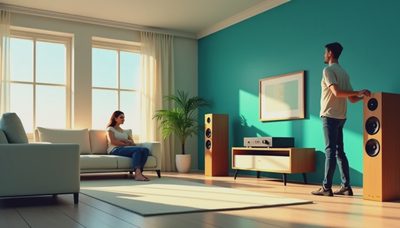
Then put the speakers where the room and the music both sound better—not where the furniture arrangement originally dictated.
No notes yet — write the first one.