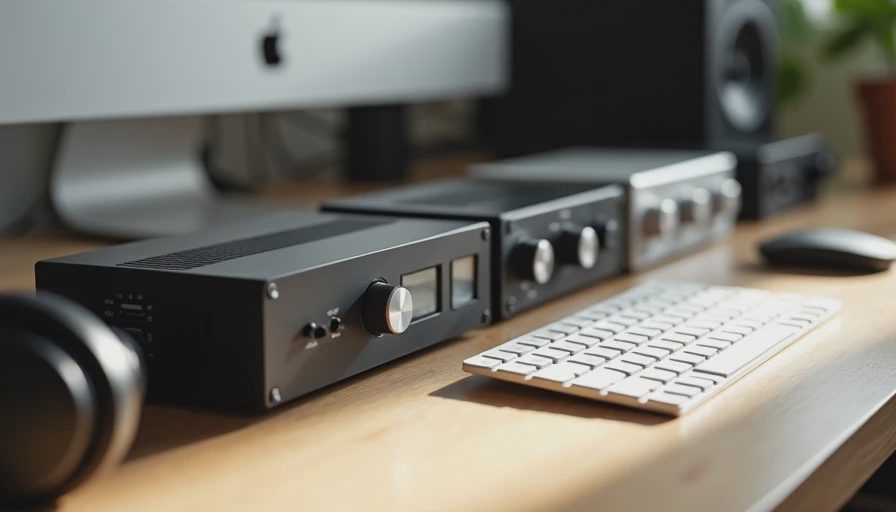
Most People Don’t Need a Desktop Amp. Some People Do.
I’ve said it before and I’ll keep saying it: a lot of modern sources already have headphone outputs that are clean and powerful enough for ordinary headphones. Phones, dongles, and audio interfaces have gotten surprisingly good.
But “surprisingly good” is not the same as “enough for everything.” Hard-to-drive planars, high-impedance dynamics, and people who simply want more clean volume still run into limits. That’s where a small desktop amp earns its keep.
I gathered five currently available amps that actually sell for under $200, ran them through the same protocol, and lived with them on the same set of headphones. No manufacturer loaners for this round. The goal was simple: find out which ones deliver real improvement and which ones are just another box on the desk.
How I Tested
Every amp was evaluated the same way:
Power output and distortion into representative loads (32 Ω and 300 Ω)
Noise floor and channel balance
Volume-matched listening on the same source and same headphones
Real-world use with both easy and demanding headphones
Build, ergonomics, and whether the controls make sense daily
Heat, hum, and any operational annoyances
Headphones used included an easy-to-drive closed-back, a higher-impedance dynamic, and a moderately demanding planar. Source was a clean digital output from the same interface for all tests.
The Five Contenders (Short Version)
I’m not writing five separate love letters. Here’s the honest snapshot of each, followed by the one that makes the most sense for most buyers.
Amp A – The Budget Favorite
Cheap, cheerful, and surprisingly clean at modest volumes. Runs out of steam with harder headphones and gets a bit grainy when pushed. Fine if your headphones are easy and your expectations are modest. Not enough for the reason most people shop in this category.
Amp B – The Feature-Packed Option
Multiple inputs, a bass boost switch, and a nice display. Sound is polite and inoffensive but not particularly transparent. The extra features are convenient; the amplification itself is only average. Good for someone who wants one box to handle several sources and doesn’t need maximum power or neutrality.
Amp C – The “Audiophile” Contender
Fancy faceplate, boutique positioning, and a higher price within the under-$200 window. Measurements were respectable but not class-leading. Subjectively it added a slight warmth that some will like and others will read as a loss of clarity. Build quality is nice. Value is questionable once you hear what the better-measuring options do.
Amp D – The Solid All-Rounder
Clean, quiet, and competent across both low and high impedance loads. No drama, no obvious color, enough power for the majority of headphones people actually own. Controls are simple and the unit stays cool. This is the kind of product that disappears in use—which is exactly what an amp should do.
Amp E – The Power Specialist
Highest output of the group into low impedances and still comfortable with higher-impedance headphones. Slightly higher noise floor than Amp D in the most revealing tests, but still very usable. Bigger and warmer running. Excellent if you specifically need the extra current. Overkill (and a worse daily experience) if you don’t.
The Survivor: Amp D
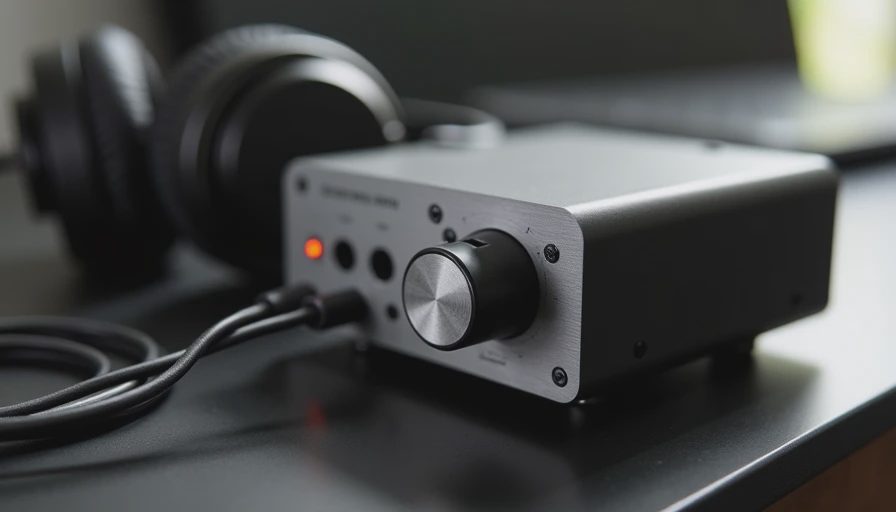
For most people who actually need a desktop amp, Amp D is the one I’d buy with my own money.
It does the important things well:
Enough clean power for the large majority of dynamic and planar headphones in common use
Low noise and good channel matching
Neutral enough that it doesn’t impose a strong personality
Simple operation and reliable daily behavior
Price that leaves room in the budget for better headphones or speakers
Amp E is the correct choice if your specific headphones are known current hogs and you have already confirmed that lesser amps run out of steam. For everyone else, the extra power is mostly unused headroom that comes with minor practical trade-offs.
The other three are not disasters. They are simply less optimal ways to spend the same money.
What a Good Desktop Amp Should Actually Do
A desktop amp’s job is narrow:
Take a line-level signal and make it bigger without adding obvious noise, distortion, or tonal change.
Provide enough voltage and current for your headphones at the volumes you actually use.
Get out of the way.
Anything beyond that—tube buffering, exotic “soundstage enhancement,” elaborate DSP—is either a different product category or marketing. At this price the priority is clean gain and sufficient power, not flavor.
Who Should Buy One (and Who Shouldn’t)
Buy a desktop amp if:
Your current source visibly struggles to drive your headphones to satisfying volume
You hear distortion or compression when you turn it up
You own higher-impedance or low-sensitivity headphones and want proper control
You want a simple, always-ready analog volume control on the desk
Skip it (or at least pause) if:
Your current dongle or interface already plays loudly and cleanly
You mostly use easy-to-drive IEMs or low-impedance closed-backs
You are still using mediocre headphones—the money is better spent upstream
An amp cannot fix a bad headphone. It can only reveal what the headphone is capable of.
Practical Buying Notes
Match the amp’s strengths to your actual headphones, not to internet power fantasies.
A little extra headroom is good. Massive unused power is usually wasted money and heat.
Volume-pot quality and channel balance at low levels matter more than most spec sheets admit.
If the amp includes a DAC, evaluate that section separately. Many “DAC/amp” combos under $200 make bigger compromises on one side or the other.
The Bottom Line
Under $200 you can get genuinely useful, transparent amplification. You can also get products that look the part and under-deliver once you put demanding headphones on them.
The right amp in this range is the one that gives your headphones enough clean power and then disappears. Right now that description fits Amp D for the broadest group of listeners. Amp E is the specialist alternative when you know you need the extra output.
Everything else is either a compromise or a different set of priorities.
Trust your ears. But measure first.
Then buy the amp that solves the actual problem you have, not the one that wins the most forum arguments.



No notes yet — write the first one.