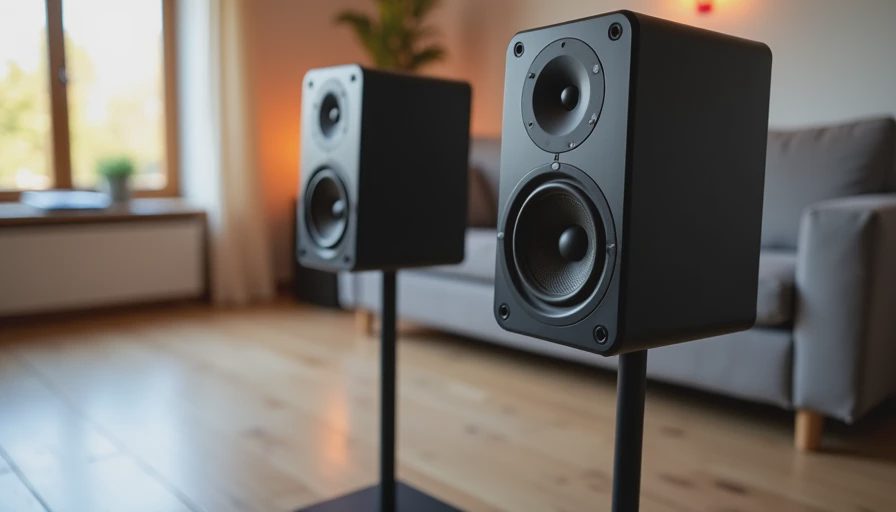
The Lie We Were Sold About “Hi-Fi” Speakers
I used to think the same thing most people do. Studio monitors were tools. Clinical. Fatiguing. Designed to make every flaw in a mix scream at you so you could fix it. Hi-fi speakers were for pleasure—warm, forgiving, “musical.”
Then I started bringing monitors home.
After years of mixing on Yamaha NS-10s, ATC SCMs, and Genelecs, I put a pair of used nearfield monitors in my living room. No fancy stands at first. No acoustic treatment beyond a rug and some curtains. Just the speakers, a decent amp, and the same music I actually listen to.
They sounded better than the majority of “hi-fi” speakers I’d heard at the same price. Not more impressive. Better. More honest. More involving over long sessions. Less of that slow realization that the speaker was adding its own story on top of the music.
That experience is the reason this category exists.
What Studio Monitors Are Actually Designed to Do
Studio monitors are built for one primary job: tell the truth about the signal going into them. A mix engineer needs to know whether the vocal is too bright, whether the bass will disappear in a car, whether the snare is masking the hi-hat. If the speaker lies, the mix suffers.
That design goal produces a few practical advantages for home listening:
Flatter frequency response. Not perfect, but usually closer to neutral than most consumer speakers that deliberately boost bass and treble to sound “exciting” in a showroom.
Better controlled directivity. Many monitors are designed so the sound stays more consistent as you move off-axis. That helps in real rooms where you don’t always sit in the exact sweet spot.
Higher dynamic capability and lower distortion at realistic volumes. You can turn them up without the speaker falling apart as quickly.
Honest midrange. Voices and instruments sit where they should instead of being smoothed or hyped.
Hi-fi speakers often chase a different target: immediate pleasure. A little extra warmth, a little more sparkle, a bigger sense of “soundstage.” Those choices can sound impressive for thirty seconds and tiring after thirty minutes. Or they can simply color everything you play until you forget what the recording actually sounds like.
I’m not saying every studio monitor is great or every hi-fi speaker is bad. I’m saying the design priority of monitors aligns better with long-term listening satisfaction for a lot of people.
The “Fatiguing” Myth
The most common objection I hear is that monitors are fatiguing. “They sound too revealing. I can’t relax.”
Sometimes that’s true—especially with older hard-edged designs or monitors that have a big upper-mid bump. But a lot of the fatigue people experience comes from three other places:
Bad placement. Monitors shoved against a wall or stuck in a bookshelf without any boundary consideration will exaggerate bass and create peaks that wear you out.
Untreated rooms. A bright speaker in a reflective room is brutal. The same speaker in a room with some absorption and diffusion becomes much more listenable.
Expectation. If you’re used to a smiley-face EQ curve (boosted bass and treble), a flatter speaker can feel thin or harsh at first. Your brain adapts. Give it a week of regular listening before you decide.
I’ve mixed twelve-hour days on NS-10s. Those things are not gentle. Yet when I take a well-behaved modern monitor home and set it up with a little care, I can listen for hours without fatigue. The difference is context and setup, not some inherent “studio versus hi-fi” curse.
Real-World Advantages in a Normal Home
Most of us don’t have dedicated listening rooms. We have living rooms, offices, and bedrooms with windows, couches, and other people.
In those spaces, studio monitors often win for practical reasons:
Size and output. A good 5- or 6-inch nearfield can play louder and cleaner than many larger “bookshelf” hi-fi speakers that prioritize looks over engineering.
Active designs. Many excellent monitors are active (powered). You get a matched amp, often with useful room-compensation switches, and you eliminate a box and a set of cables. In 2026 this is a feature, not a compromise.
Value. The used and new monitor market is full of speakers that outperform hi-fi models costing two or three times as much. Pro audio has to work in commercial environments. That keeps prices more honest.
Consistency. Once you learn a good monitor, you can trust it. You’re less likely to keep chasing the next “upgrade” because the speaker stopped being the weak link.
I still own and enjoy traditional hi-fi speakers. Some of them are wonderful. But when someone asks me how to get the most accurate, long-term satisfying sound for real money, I point them at monitors more often than not.
How to Make Monitors Work at Home Without Looking Like a Studio
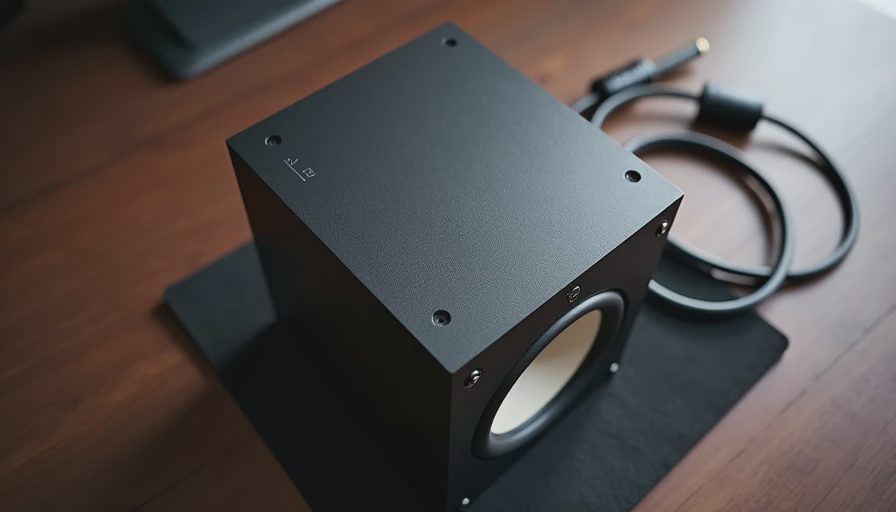
You do not need to turn your living room into a control room. A few practical steps go a long way:
Pull them away from the wall. Even 8–12 inches helps.
Form a rough equilateral triangle with your listening position. Toe them in so the tweeters point at your ears or just behind them.
Start with the speakers at ear height. Bookshelf stands or sturdy desks both work.
Use the rear-panel boundary switches if they exist. They are there for a reason.
Add a rug between you and the speakers if the floor is hard. Curtains help with windows. You don’t need a full acoustic build-out to hear a big improvement.
Match the volume to normal listening levels. Monitors can play loud, but most music was mixed to sound best at moderate levels.
Do those things and a good pair of monitors will sound more natural and less “studio” than most people expect.
What I Listen For When I Evaluate Monitors for Home Use
When I bring a monitor home for this site, I’m not scoring it like a tracking-room tool. I’m asking different questions:
Does it stay listenable for a whole album?
Do voices sound like voices or like a product?
Can I hear into the mix without the speaker adding its own haze or edge?
How does it behave when I turn it up a bit for a good track?
Does it still work when I move off the exact center seat?
Those are home-listening questions. The best monitors answer them well. Many traditional hi-fi speakers, optimized for showroom demos, do not.
The Bottom Line
Studio monitors are not magic. Bad ones exist. Poor setup will ruin good ones. But the core design goal—tell the truth about the signal—produces speakers that often deliver more satisfying long-term listening than the average hi-fi box at the same price.
You don’t need a treated room the size of a commercial studio. You need honest transducers, reasonable placement, and the willingness to trust your ears after you’ve given them a fair chance.
Trust your ears. But measure first.
And if the measurement and the listening both point toward a pair of monitors, don’t let the word “studio” scare you off. Some of the best home speakers I’ve ever lived with never appeared in a hi-fi magazine.
No notes yet — write the first one.