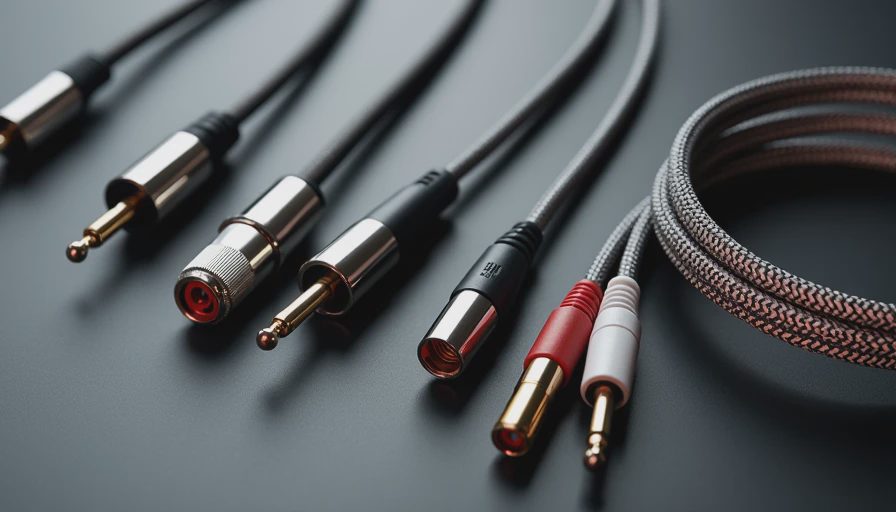
The Most Expensive Placebo in Audio
I’ve watched people spend more on a pair of interconnects than I spent on my first real studio monitors. I’ve listened to the claims: wider soundstage, blacker backgrounds, better PRaT, more “organic” texture. I’ve also measured and level-matched enough cable swaps to know that the vast majority of those claims do not survive controlled testing.
Once a cable meets basic electrical requirements for the job, further spending almost never produces an audible improvement. The differences people report are usually explained by volume mismatches, expectation bias, or the simple fact that they wanted the expensive cable to sound better.
This is not a popular position in certain corners of the audio world. It is, however, the one that matches both the physics and the controlled listening evidence.
What a Cable Actually Has to Do
An analog interconnect or speaker cable has a short list of jobs:
Conduct the signal with very low resistance
Avoid turning into an antenna for interference
Not introduce excessive capacitance or inductance that could interact badly with the source or load
Stay mechanically reliable
For line-level interconnects in normal home lengths (under a few meters), almost any well-made cable with proper shielding accomplishes this. For speaker cables in normal lengths, adequate gauge and secure terminations are the main requirements.
The exotic materials, complex geometries, cryogenic treatments, and mystical dielectric theories that fill high-end cable marketing rarely move the needle into the realm of audibility once those basics are covered.
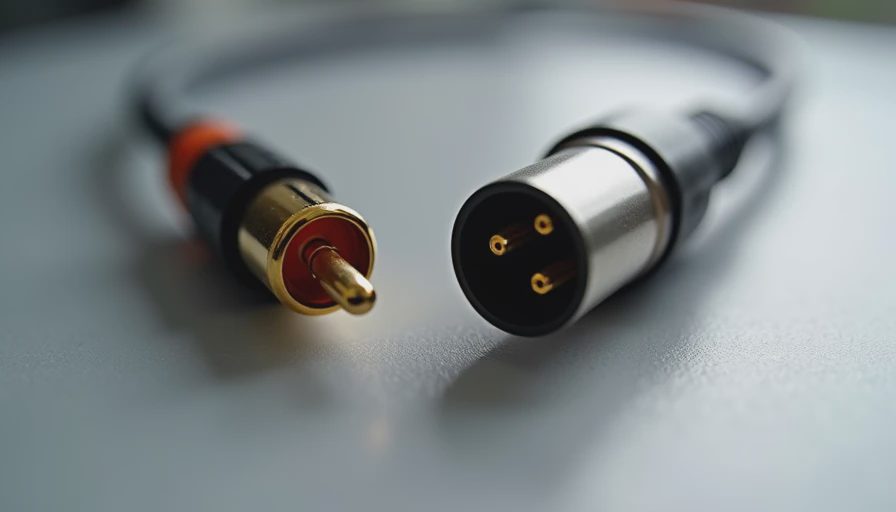
Where Differences Can Actually Appear
There are a few real-world situations where cable choice matters more than usual:
Very long runs. Resistance and capacitance start to add up. A cheap, thin cable over 10–15 meters can cause measurable (and sometimes audible) high-frequency roll-off or level loss.
High-impedance or unusual loads. Some older tube gear or specific headphone situations can be more sensitive to capacitance.
Poorly shielded cables in electrically noisy environments. A bad cable can pick up hum or digital noise. Good shielding fixes this; “audiophile” pricing is not required.
Digital cables (USB, optical, coaxial, Ethernet). These are a different category. They either deliver the bits correctly or they don’t. Once error-free transmission is achieved, further expenditure is usually cosmetic or mechanical.
In normal home audio with modern solid-state gear and reasonable cable lengths, these edge cases are uncommon.
The Listening Reality
I have done casual and more careful cable comparisons many times over the years. When levels are matched and the listener does not know which cable is playing, the differences that remain are almost always smaller than the differences between two competent speakers or even two different recordings of the same song.
People frequently report large improvements when they know which cable is in the system. That is not evidence of superior performance. It is evidence of how powerful expectation and investment justification can be.
Measurements back this up. Frequency response, distortion, and noise remain effectively identical across a wide range of competent cables. When they do not, the cable was usually defective or unsuitable for the job in the first place.
What Is Worth Paying For
Spend money on cables when it buys you something real:
Proper gauge for speaker runs
Decent shielding for interconnects
Reliable connectors that do not oxidize or fall apart
The correct termination for your gear (balanced vs unbalanced, etc.)
Length that actually fits your setup without excess coil
A well-made $20–50 interconnect or a correctly sized speaker cable from a reputable commodity brand will do the job in the overwhelming majority of systems. Spending hundreds or thousands more almost never improves the sound in a way that survives controlled comparison.
Mechanical quality and convenience can justify moderate extra cost. Sonic magic cannot.
How to Think About Cable Claims
When someone tells you a cable transformed their system, ask a few questions:
Was the comparison level-matched?
Was it blind?
What exactly changed in the sound, and is that change consistent with known cable behavior?
Did the previous cable have an actual problem (poor contact, broken shield, excessive length)?
Most of the time the answers reveal that the improvement was either imaginary or the result of fixing a real but basic fault that any competent cable would have solved.
The Practical Bottom Line
Buy cables that are well-made, correctly specified for the job, and priced like the simple electrical components they are. Put the rest of the money into speakers, room treatment, or simply more music.
The signal chain contains many places where engineering differences are real and audible. Cables, once they clear a low bar of competence, are almost never one of those places.
Trust your ears. But measure first.
And the next time a cable review spends three paragraphs on “soundstage depth” without a single measurement or controlled listening protocol, you already know how much weight to give it.



No notes yet — write the first one.